
7 Days in Washington D.C.: History and Memory
For travelers seeking an in-depth exploration of the history of the city and the nation
7 Days in Washington D.C.: History and Memory
For travelers seeking an in-depth exploration of the history of the city and the nation
Day 1: Monumental Foundations and Enduring Ideals
Discover Washington's iconic memorials while tracing the nation's founding principles and the sacrifices that shaped its history.
Morning
Begin your day with a walk past The White House, the official residence and workplace of the President of the United States. Continue to the nearby World War I Memorial, honoring the Americans who served during the First World War, before reaching the soaring Washington Monument, one of the city's defining landmarks.
Optional add-on: Ride to the top of the Washington Monument for panoramic views of the capital. Timed-entry passes are required and should be reserved in advance.
Afternoon
Continue west along the National Mall to the World War II Memorial, whose fountains and granite pillars commemorate the unity and sacrifice of the American people during the Second World War.
Optional add-on: Take a stroll through Constitution Gardens, a peaceful landscaped park featuring tree-lined pathways, a small lake, and Signers’ Memorial, a tribute to the 56 Signers of the Declaration of Independence.
Walk through the Vietnam Veterans Memorial, where the names of more than 58,000 fallen service members are engraved in polished black granite, then visit the Korean War Veterans Memorial, featuring lifelike statues of soldiers on patrol.
Finish at the Lincoln Memorial, where the towering seated statue of Abraham Lincoln overlooks the Lincoln Memorial Reflecting Pool and the National Mall.
Optional add-on: Continue around the Tidal Basin to visit the Martin Luther King Jr. Memorial, centered around the monumental Stone of Hope sculpture, and the Thomas Jefferson Memorial, a domed neoclassical monument dedicated to one of the nation's Founding Fathers. Consider also including at stop at the DC War Memorial, a small but moving tribute to District residents who served in World War I.
Evening
Return to the National Mall after sunset to experience the monuments beautifully illuminated, remaining on well-traveled paths throughout the evening. Avoid isolated areas between monuments.
Optional add-on: Visit the rooftop terrace at The John F. Kennedy Center for the Performing Arts for sweeping views of the Potomac River before or after dinner.
Day 2: Democratic Institutions and Founding Documents
Explore the buildings and records that established the framework of American government before discovering the stories of the continent's first peoples.
Morning
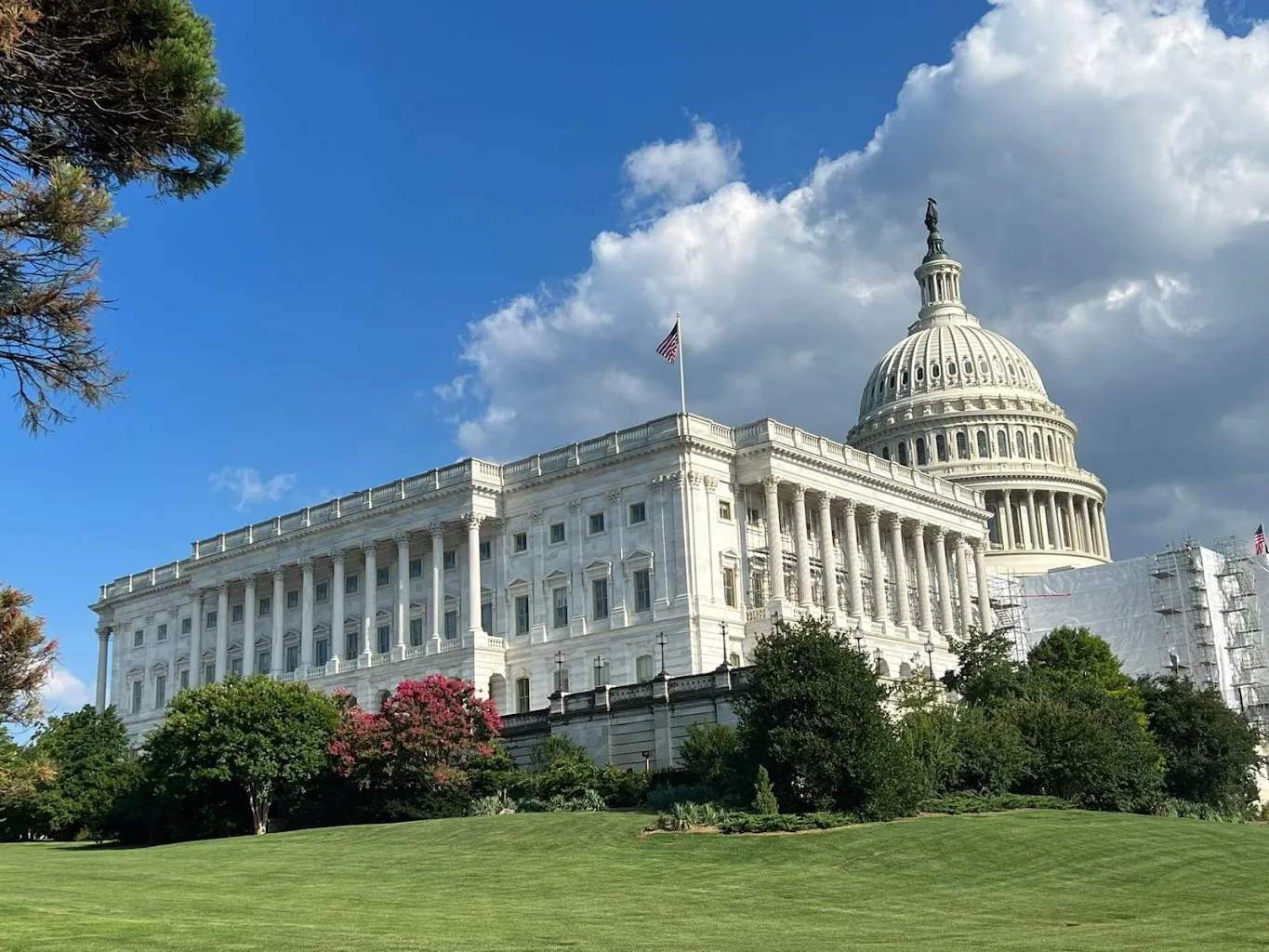
Begin with a guided tour of the United States Capitol, where you'll learn about the architecture, history, and operation of the legislative branch. Advance reservations are strongly recommended as guided tours often reach capacity.
Optional add-on: Visit the Belmont-Paul Women's Equality National Monument, headquarters of the National Woman's Party and an important site in the American women's suffrage movement.
Continue across Capitol Hill to the Supreme Court of the United States, where, if open, self-guided exhibits introduce the nation's highest court, before visiting the Library of Congress, renowned for its grand architecture, historic reading rooms, and extensive collections.
Afternoon
Visit the National Archives Museum, where the original Declaration of Independence, Constitution, and Bill of Rights are displayed in the Rotunda for the Charters of Freedom.
Continue to the National Museum of the American Indian, where exhibits explore the histories, cultures, and traditions of Indigenous peoples throughout the Americas.
Evening
Spend the evening exploring Eastern Market, a historic public market that has served Capitol Hill since 1873. Browse local shops or, if visiting on a weekend, enjoy the outdoor market before dinner.
Day 3: American Stories and Presidential Legacy
Discover the people, artifacts, and events that shaped the nation.
Morning
Spend the morning at the National Museum of American History, whose exhibits explore everything from presidential history and military conflict to transportation, innovation, and popular culture.
Afternoon
Visit Ford's Theatre, where President Abraham Lincoln was shot. Continue across the street to the Petersen House, where Lincoln died the following morning and where exhibits examine the impact of his assassination on the nation.
Optional add-on: Browse the National Portrait Gallery, where portraits of presidents, artists, reformers, and innovators provide another perspective on the people who shaped the United States.
Evening
Enjoy dinner at Old Ebbitt Grill, Washington's oldest continuously operating restaurant and a longtime gathering place for politicians, journalists, and visitors exploring the nation's capital, or another historic restaurant of your choice.
Day 4: Freedom's Journey and Civil Rights
Follow the continuing pursuit of equality through museums, historic homes, and neighborhoods central to the nation's civil rights story.
Morning/Early Afternoon
Explore the National Museum of African American History and Culture, where immersive exhibits chronicle centuries of history, achievement, resilience, and the ongoing struggle for civil rights. Timed-entry passes are generally required, with exceptions for military and first responders. Check availability and reserve in advance.
Late Afternoon
Explore the historic U Street DC, long known as the cultural heart of Black Washington. Visit the African American Civil War Memorial, honoring the African American troops who fought during the Civil War.
Optional add-on: Tour the Mary McLeod Bethune Council House National Historic Site, preserving the home of the influential educator, civil rights leader, and presidential advisor.
Evening
Consider enjoying dinner at Ben's Chili Bowl, a Washington institution and an enduring symbol of the U Street neighborhood's cultural and civil rights history.
Day 5: Emancipation and Enduring Change
Visit the homes of leaders whose lives helped reshape the nation before exploring neighborhoods connected to Washington's intellectual and social history.
Morning
Start at the Frederick Douglass National Historic Site, where the famed abolitionist, author, and statesman lived during the final years of his life. Preserved rooms and personal belongings offer insight into an influential voice for freedom and equality.
Afternoon
Tour President Lincoln's Cottage, where Abraham Lincoln spent much of the Civil War and developed ideas that culminated in the Emancipation Proclamation.
Optional add-on: Take a self-guided walk through the campus of Howard University, one of America's leading historically Black universities.
Optional add-on: Visit The President Woodrow Wilson House, the city's only presidential museum, preserving the home of the nation's 28th president.
Evening
Spend the evening exploring the historic Logan Circle neighborhood with over a hundred historic buildings tied to the Civil War and African American heritage.
Day 6: Sacrifice and Remembrance
Reflect on military service, national loss, and the importance of preserving memory for future generations.
Morning
Spend the morning at Arlington National Cemetery, the nation's most prominent military cemetery. Visit The Tomb of the Unknown Soldier, honoring unidentified American service members who made the ultimate sacrifice, and, if timing allows, witness the ceremonial Changing of the Guard.
Continue to the President John F. Kennedy Memorial, where an eternal flame marks the gravesite of the 35th President of the United States, then visit Arlington House, the Robert E. Lee Memorial to contribute to an understanding the Civil War and emancipation.
Before leaving Arlington, stop at the nearby US Marine Corps War Memorial, inspired by the iconic photograph of the flag raising on Iwo Jima during World War II.
Afternoon
Visit the United States Holocaust Memorial Museum, which is dedicated to documenting the Holocaust and promoting the lessons of remembrance, human dignity, and the prevention of genocide.
Optional add-on: Visit the nearby Dwight D. Eisenhower Memorial, honoring the Supreme Allied Commander of World War II and the 34th President of the United States.
Evening
Head to historic Georgetown, where cobblestone streets, waterfront views, and colonial-era buildings create one of Washington's most atmospheric neighborhoods.
Optional add-on: Visit Old Stone House, the oldest surviving building in Washington, DC, before enjoying a stroll through Georgetown Waterfront Park along the Potomac River.
Day 7: Mount Vernon's Presidential Estate and Colonial Streets
Step beyond downtown Washington to explore the home of America's first president before ending your visit in a well-preserved historic town.
Day
Optional add-on: Enjoy a scenic bicycle ride from Old Town Alexandria along the Mount Vernon Trail to Mount Vernon, for a mostly wooded bicycle ride along the Potomac, with river views opening up as you approach the estate.
Travel to George Washington's Mount Vernon, where preserved buildings, formal gardens, a working farm, and riverside grounds offer an in-depth look at the life and legacy of the nation's first president.
Evening
Spend the evening exploring Old Town Alexandria, where brick sidewalks, colonial-era buildings, independent boutiques, and waterfront restaurants create a relaxed atmosphere.
Optional add-on: Enjoy dinner at historic Gadsby's Tavern, where George Washington, Thomas Jefferson, and other early American leaders once dined.
Bad Weather Options: Museums
In case of bad weather, visit the:
- National Building Museum to explore engaging exhibits on architecture, engineering, urban planning, and design
- International Spy Museum to discover the history of espionage through interactive exhibits and authentic intelligence artifacts
- National Postal Museum to trace the history of American communication, transportation, and innovation through engaging exhibits
- DAR Museum to view decorative arts and furnishings that illustrate everyday life in early America
Trip Extension: Colonial Williamsburg
To extend your stay in Washington D.C., consider adding an overnight trip to Virginia's Historic Triangle to learn about the origins of English settlement and the American Revolution.
Begin at Colonial Williamsburg, which is set up as a living history museum. Wander restored eighteenth-century streets, visit historic homes and public buildings, meet costumed interpreters, and watch traditional crafts such as blacksmithing, printing, and cabinetmaking recreate daily life in colonial America.
The next day continue to Yorktown Battlefield, where the decisive victory of the American Revolution secured American independence. If time permits before returning, visit Historic Jamestowne and the adjacent Jamestown Settlement to explore the story of England's first permanent colony in North America through archaeological remains, reconstructed ships and fortifications, and immersive living-history exhibits.
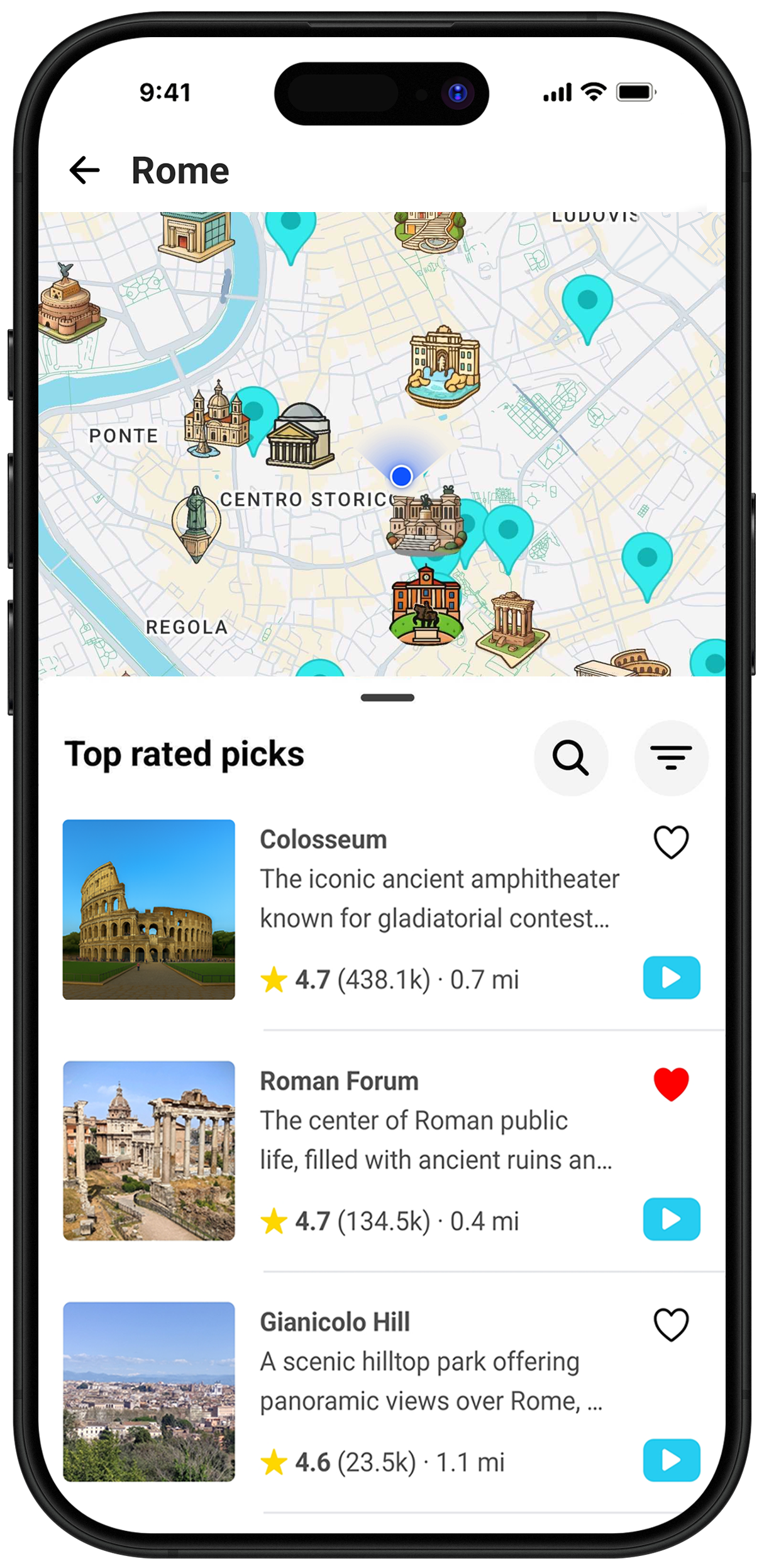
Make the most of your trip with the Travi App
Audio Guides
Professional narrated stories that you can listen to on your own schedule.
Snap & Learn
Point your camera at any monument to instantly identify it and hear its history.
Itineraries
Browse curated day-by-day plans, customize them to fit your style, or build your own from scratch and share with friends.