
4 Days in Vienna
For first-time visitors and travelers seeking the most highly rated and popular sights in and near the city
4 Days in Vienna
For first-time visitors and travelers seeking the most highly rated and popular sights in and near the city
Day 1: Habsburg Grandeur and Café Culture
Experience Vienna through its imperial landmarks, café culture, and Art Nouveau architecture.
Morning
Begin the day at St. Stephen's Cathedral, the Gothic cathedral whose patterned roof and soaring south tower have become defining symbols of Vienna’s skyline. Step inside to observe the vaulted interior, chapels, and centuries of religious and civic history connected to the cathedral.
Requirements for respectful/modest attire apply at churches and other religious sites. Visitors should avoid disrupting religious observances and remain mindful of posted customs.
Continue to Café Central for coffee and cake at a place that has historically attracted writers, intellectuals, and political figures, and remains one of the city’s most recognizable coffeehouses. Consider trying apfelstrudel (layered pastry filled with apples and raisins) alongside a Viennese coffee.
Head onward to The Hofburg, the former imperial residence of the Habsburg dynasty, whose courtyards and ceremonial buildings reflect centuries of imperial rule. Within the complex, visit the Austrian National Library State Hall, a Baroque library hall lined with frescoed ceilings, marble statues, Venetian globes, and historic collections.
Afternoon
Make your way to Naschmarkt, Vienna’s best-known market, where food stalls, produce stands, and small eateries create a lively atmosphere. Pause for lunch and try Wiener schnitzel, (breaded, fried veal cutlet).
Continue to Karlskirche, a Baroque church distinguished by its large dome and monumental columns inspired by classical architecture. The church’s exterior and reflecting pool make it one of Vienna’s most photographed landmarks.
Optional add-on: Visit the Secession, known for its white façade, gilded dome, and works by Klimt.
Conclude the afternoon at the Upper Belvedere of the Belvedere Palace, a Baroque palace housing Austrian art, including the The Kiss by Gustav Klimt. If time permits, stroll through the formal palace gardens for views back toward the city skyline.
Evening
Begin the evening with a ride along the Ringstrasse tram route, which circles Vienna’s historic center past monumental buildings, parks, museums, and civic architecture. Buildings such as the Austrian Parliament Building, Vienna City Hall, and the Burgtheater present an architectural vision of imperial and civic identity.
Spend the rest of the evening in Vienna’s Innere Stadt, the historic city center and a UNESCO-listed district shaped by imperial architecture and elegant shopping streets. Enjoy dinner nearby before strolling along Graben, where illuminated façades, cafés, and historic buildings create one of the city’s classic nighttime atmospheres.
Day 2: Royal Splendour and Artistic Traditions
Spend the day exploring Vienna’s imperial summer residence and world-class art collections before concluding with an evening of classical music in one of the city’s most celebrated concert halls.
Morning
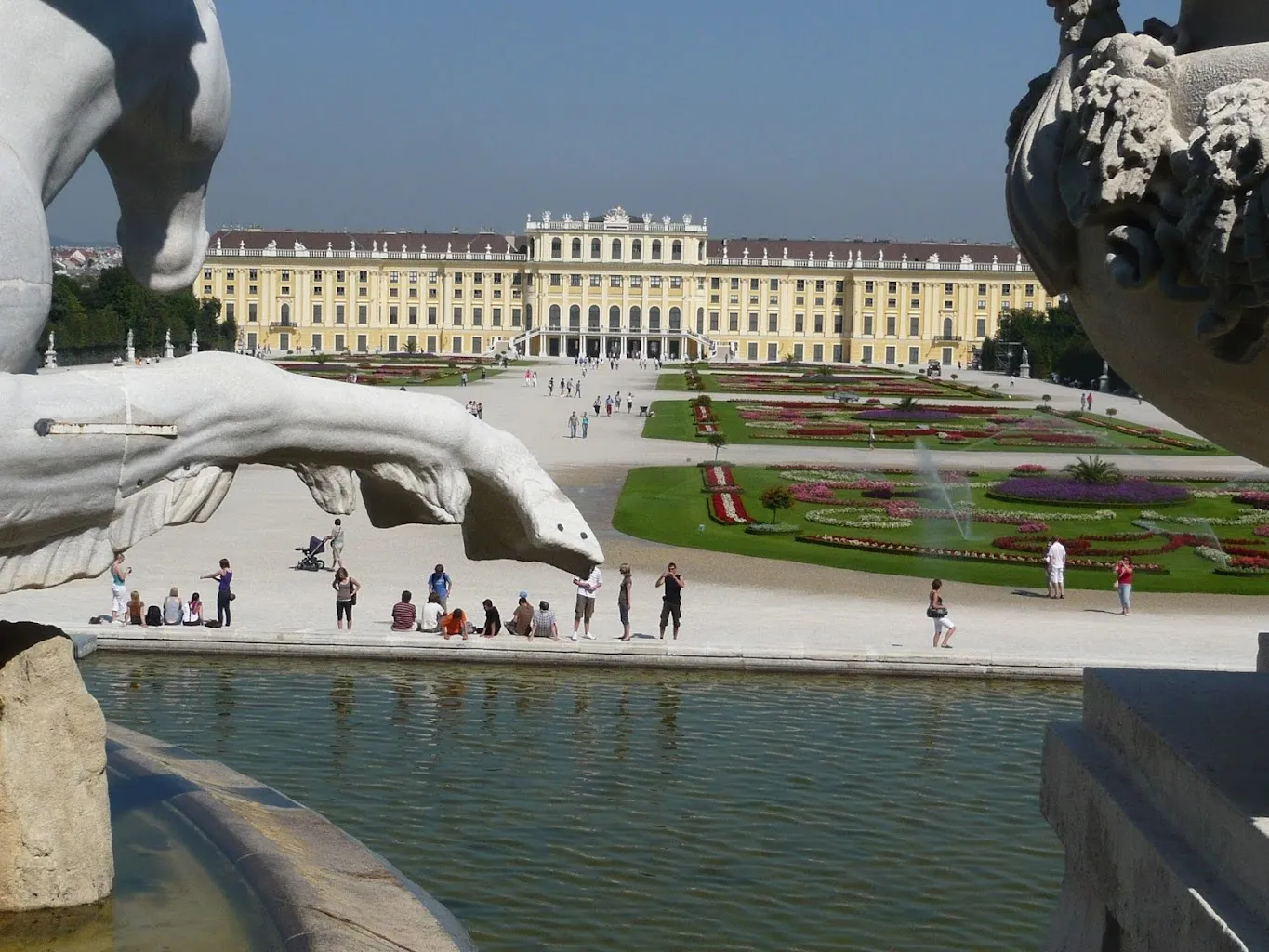
Begin the morning at Schönbrunn Palace, the former summer residence of the Habsburg rulers. The palace interiors reflect the ceremonial life of the imperial court, with ornate state rooms and Rococo decoration.
Optional add-on: After touring the palace, spend time walking through the formal gardens, where pathways, fountains, sculptures, and landscaped terraces extend across the grounds. Continue uphill to the Gloriette Schönbrunn, a hilltop structure overlooking the palace complex with panoramic views across Vienna’s rooftops and surrounding hills.
Afternoon
Head to the Kunsthistorisches Museum Wien, one of Europe’s great art museums housing works by artists such as Pieter Bruegel the Elder, Velázquez, Titian, and Caravaggio, alongside decorative arts and antiquities. Visitors with limited time may wish to focus on the Old Masters Picture Gallery and the museum’s grand central staircase and dome.
Pause afterward for a café stop at one of Vienna’s traditional coffeehouses, where lingering over coffee and pastries remains part of the city’s cultural rhythm.
Evening
Conclude the day with a concert at the Musikverein Wein, the renowned concert hall best known for its Golden Hall and its association with the Vienna Philharmonic.
Day 3: Wachau Valley and the Danube Landscape
Leave Vienna for a day in the Wachau Valley, a scenic stretch of the Danube known for Baroque abbeys, vineyard-covered hillsides, historic villages, and river views shaped by centuries of trade and settlement.
Morning
Begin the journey by train from Vienna to Melk, a riverside town best known for its monumental abbey overlooking the Danube.
Visit the Melk Abbey, a Baroque monastery dramatically positioned above the river. Its ornate halls, library, frescoed ceilings, and church interiors reflect the wealth and influence of the Benedictine monastery during the Baroque era. The abbey terraces and gardens also provide sweeping views across the Wachau landscape.
Requirements for respectful/modest attire apply at churches, synagogues, and other religious sites. Visitors should avoid disrupting religious observances and remain mindful of posted customs.
Then board a Danube river cruise toward Dürnstein, passing vineyard terraces, small riverside towns, wooded hillsides, and church towers along one of Austria’s most scenic river stretches.
Afternoon
Spend the afternoon exploring Dürnstein, a compact village known for its blue-and-white abbey tower, narrow streets, and wine-growing traditions. Pause for a light lunch or wine tasting at a local tavern or winery and wander through the historic center.
Optional add-on: Hike uphill to the Burgruine Dürnstein, or Dürnstein Castle, for elevated views across the Danube Valley and surrounding vineyards. The ruins are historically associated with Richard I of England, who was reportedly imprisoned there during the twelfth century.
Continue onward to Krems an der Donau, another historic Wachau town, before taking a train back to Vienna.
Evening
Conclude with a bike ride or stroll along the Donaukanalradweg, or Danube Canal Cycle Path, where contemporary public art, nightlife, and redeveloped urban spaces reflect a modern Vienna layered over centuries of imperial, political, and cultural history.
Day 4: From Imperial Traditions to Modern Art
Explore Vienna’s imperial traditions, major art collections, and celebrated musical traditions.
Morning
Begin the morning at the Spanish Riding School, an institution associated with the Habsburg court and the tradition of classical dressage. The school is best known for its performances featuring Lipizzaner horses within an ornate Baroque riding hall, where precision movement and ceremony reflect centuries of equestrian tradition.
Continue to the Albertina, a museum combining imperial state rooms with extensive art collections. The museum is particularly known for its graphic arts holdings and exhibitions featuring artists such as Monet, Picasso, and Egon Schiele.
Afternoon
Spend the afternoon exploring the MuseumsQuartier, a large cultural complex where former imperial buildings have been adapted into museums, galleries, cafés, and public gathering spaces. Pause for a café stop within the district.
From there, walk through the Volksgarten, a landscaped park known for its rose gardens, formal pathways, and views toward surrounding monumental architecture.
Optional add-on: Visit the Leopold Museum, which houses major collections of Austrian modern art, particularly Viennese modernism and early twentieth-century artistic movements.
Evening
Head to the Vienna State Opera for an evening performance in one of the world’s most prominent opera houses, long associated with Vienna’s musical heritage and classical performance tradition.
Optional add-on: After the performance, stop at Café Sacher to try the original sachertorte (dense chocolate cake with apricot jam) closely associated with Viennese café culture.
Alternate Evening Plan
If opera tickets are unavailable or schedules do not align, consider spending the evening at Peterskirche, where the Classic Ensemble Vienna performs chamber concerts in a Baroque church setting within the historic center of the city.
Options for Bad Weather
In case of bad weather, visit the:
- Albertina Modern for Austrian and international modern and contemporary art exhibitions
- Imperial Treasury Vienna for crowns, regalia, and ceremonial treasures associated with the Habsburg dynasty and Holy Roman Empire
- Leopold Museum for Austrian modernist art, including major collections of Schiele and Klimt
- Haus der Musik for interactive exhibits exploring sound, music, and Vienna’s classical traditions
- Naturhistorisches Museum Wien for dinosaur skeletons, meteorites, minerals, and monumental nineteenth-century interiors
- Museum of Modern Art, or mumok, known for contemporary and modern art, including pop art and experimental works
Make the most of your trip with the Travi App
Audio Guides
Professional narrated stories that you can listen to on your own schedule.
Snap & Learn
Point your camera at any monument to instantly identify it and hear its history.
Itineraries
Browse curated day-by-day plans, customize them to fit your style, or build your own from scratch and share with friends.