
4 Days in Vienna: History and Memory
For travelers seeking an in-depth exploration of the history of the city
4 Days in Vienna: History and Memory
For travelers seeking an in-depth exploration of the history of the city
Day 1: Imperial Power and Public Memory
Explore how the Habsburg dynasty projected authority through architecture, ceremony, collecting, and urban design, tracing the ways imperial Vienna continues to shape the city’s historical identity and public memory.
Morning
Begin the morning at The Hofburg, the former imperial residence of the Habsburg dynasty whose courtyards, ceremonial rooms, and administrative spaces reflect centuries of dynastic rule at the center of European politics.
Optional add-on: Explore the Sisi Museum, which focuses on the life, image, and cultural memory of Empress Elisabeth of Austria (“Sisi”).
Continue to the Imperial Treasury Vienna, where regalia, crowns, reliquaries, and ceremonial objects illustrate how monarchy used symbolism and sacred authority to reinforce political legitimacy across the empire.
Next, visit the Austrian National Library State Hall, a Baroque library hall lined with frescoes, marble statues, globes, and historic collections.
Late Afternoon
Pause for coffee and pastries at a cafe before exploring the Neue Burg, where military collections, instruments, and ethnographic material reveal how the empire represented both military power and global reach. While there, take a look at or visit the Heldenplatz, known for the events of the 1938 Anschluss (annexation of Austria by Nazi Germany).
Evening
Spend the evening walking along the Ringstrasse, the grand boulevard developed in the nineteenth century around Vienna’s historic center. Buildings such as the Austrian Parliament Building, Vienna City Hall, and the Burgtheater present an architectural vision of imperial and civic identity.
Day 2: Vienna Around 1900
Examine Vienna at the turn of the twentieth century through its artistic experimentation, psychoanalytic thought, café culture, and architectural modernism, exploring a period when the city became a center of intellectual and cultural transformation.
Morning
Begin at the Karlsplatz Stadtbahn Station, which was designed by Otto Wagner as part of Vienna’s late nineteenth-century urban modernization projects and is widely regarded as a landmark of Viennese Art Nouveau architecture.
Optional add-on: Continue to the Secession, which became a symbol of artistic rebellion against academic tradition and remains closely associated with Vienna’s modernist movement.
Afternoon
Visit the Sigmund Freud Museum, located in Freud’s former apartment and office. Exhibits examine the development of psychoanalysis and Vienna’s role in shaping new approaches to psychology, identity, and modern thought.
Spend time walking through the surrounding neighborhood of Alsergrund, a district historically associated with writers, physicians, academics, and intellectual life in fin-de-siècle Vienna. Take a break for coffee and cake at a café here.
Optional add-on: Visit Karl-Marx-Hof, an example of “Red Vienna” social housing.
Evening
Spend the evening at Café Central, one of Vienna’s most famous coffeehouses, historically known as a gathering place for writers, intellectuals, and political figures.
Day 3: War and Resistance
Explore how Vienna remembers persecution, war, resistance, and imperial collapse through memorials, museums, and urban spaces connected to the city’s twentieth-century history.
Morning
Begin at the Jewish Museum of the City of Vienna, where exhibitions examine Jewish cultural life, displacement, memory, and the long history of Jewish communities in Vienna before and after the Holocaust.
Continue to Judenplatz Holocaust Memorial, a stark memorial commemorating Austrian Jewish victims of the Holocaust. The surrounding square also reflects layers of Jewish history embedded within the city’s medieval core.
Afternoon
Visit the Archives of the Austrian Resistance, which documents resistance movements, political persecution, and Austria’s evolving confrontation with its role during the Nazi period.
Optional add-on: Visit the Heeresgeschichtliches Museum Wien, whose collections address the Habsburg military, World War I, imperial collapse, and the Second World War. Use discretion when choosing which exhibits to visit as some may be intense.
Continue to the Monument in Honor of the Soldiers of the Soviet Army on Schwarzenbergplatz, a postwar monument commemorating Soviet soldiers killed during the liberation of Vienna.
Evening
Spend the evening walking through Leopoldstadt, historically one of Vienna’s most significant Jewish districts where residential streets, memorial plaques, synagogues, and Stolpersteine (“stumbling stones”) reflect layers of Jewish cultural life, wartime destruction, displacement, and postwar transformation. Stolpersteine can be found embedded within sidewalks outside former residences of Nazi victims, thereby integrating remembrance into the everyday urban landscape.
Day 4: Layering the Imperial and Modern City
Consider how Vienna preserves, reinterprets, and layers its past through imperial spaces, museums, and contemporary urban life.
Morning
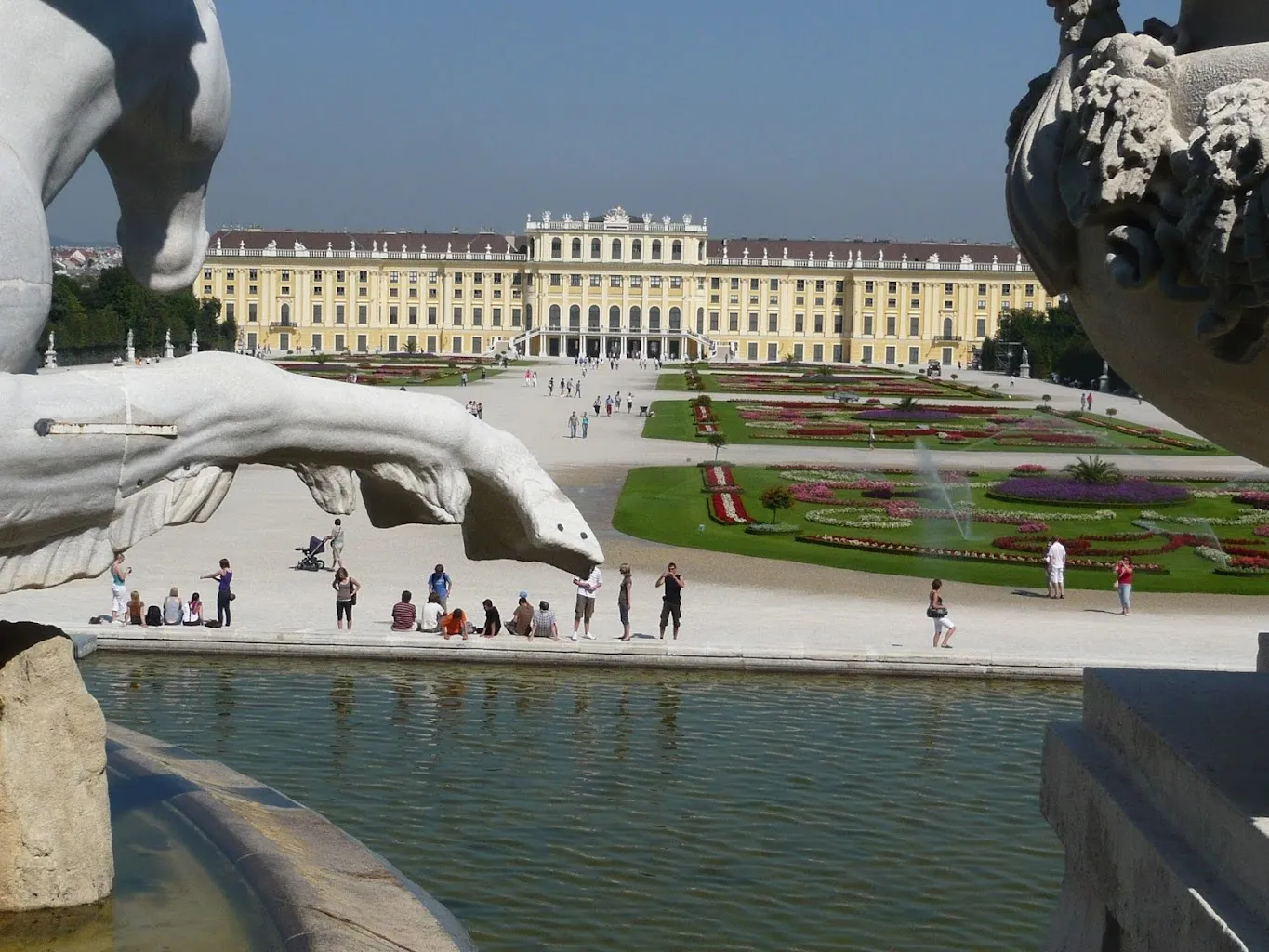
Begin at Schönbrunn Palace, the former Habsburg summer residence whose ceremonial rooms and carefully preserved interiors present an enduring image of imperial lifestyle. In contrast to the administrative character of the Hofburg, Schönbrunn Palace reflects a more domestic vision of monarchy.
Afternoon
Visit the Vienna Central Cemetery, the burial place of many famous composers and other public figures. Then, after a cafe break, explore Wein Museum Karlsplatz, whose exhibitions trace the city’s political, cultural, and social development across different historical eras.
Evening
Conclude with a sunset bike ride or stroll along the Donaukanalradweg, or Danube Canal Cycle Path, where contemporary public art, nightlife, and redeveloped urban spaces reflect a modern Vienna layered over centuries of imperial, political, and cultural history.
Options for Bad Weather
In case of bad weather, visit the Kunsthistorisches Museum Wien, where its collections of Old Masters, decorative arts, and antiquities demonstrate how dynastic collecting shaped cultural prestige and historical memory within the Habsburg court.
Optional Trip Extension
To extend your time in Vienna, consider adding a day trip to Carnuntum Archaeological Park to explore reconstructed Roman townhouses, functional public baths, a villa, and an amphitheater.
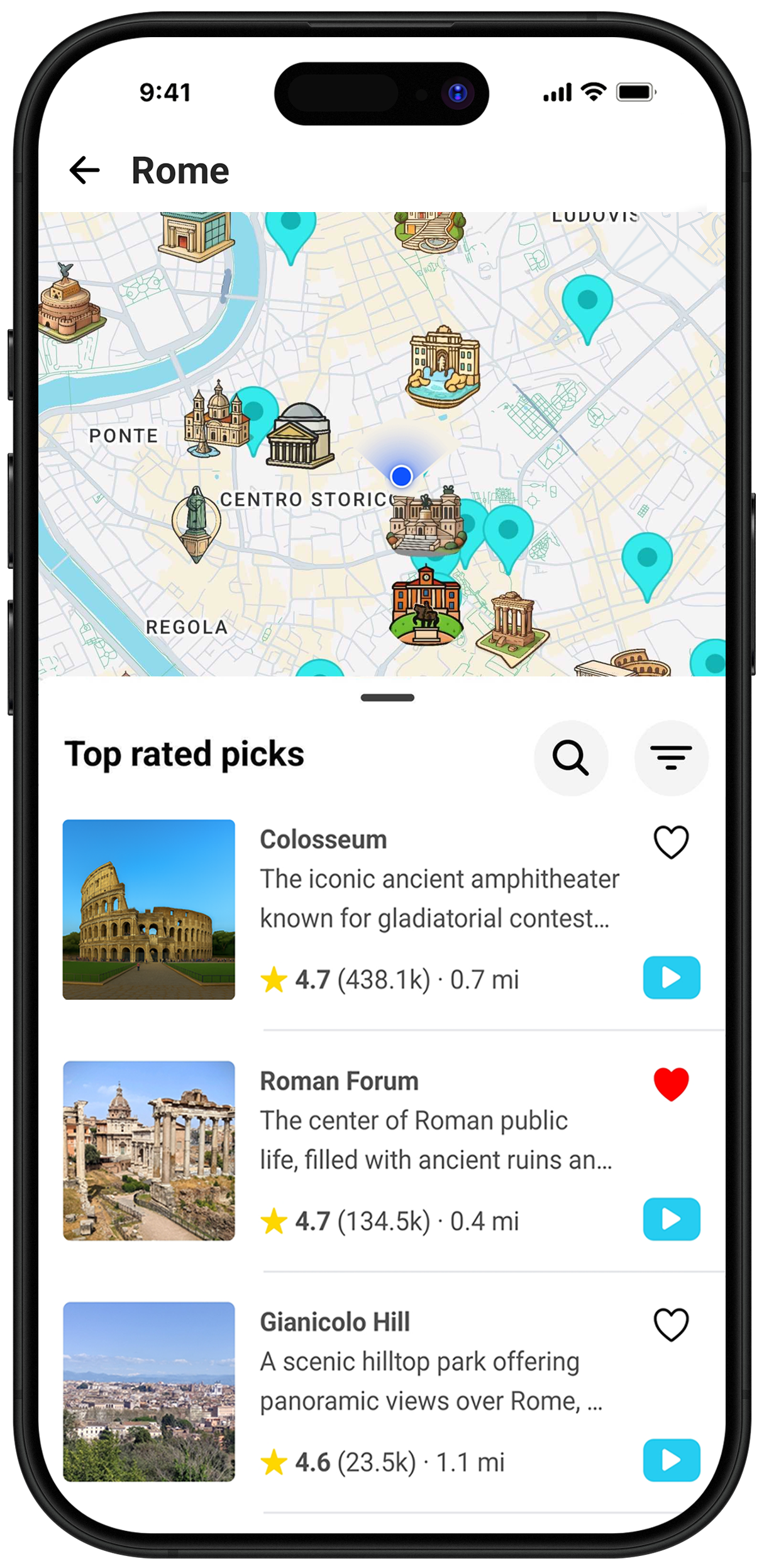
Make the most of your trip with the Travi App
Audio Guides
Professional narrated stories that you can listen to on your own schedule.
Snap & Learn
Point your camera at any monument to instantly identify it and hear its history.
Itineraries
Browse curated day-by-day plans, customize them to fit your style, or build your own from scratch and share with friends.