
5 Days in Venice
For travelers seeking the most popular sights as well as lesser-known gems of the city
5 Days in Venice
For travelers seeking the most popular sights as well as lesser-known gems of the city
Day 1: Political Power and Everyday Life
This day introduces Venice through its grand civic heart and then gradually reveals its quieter, lived-in neighborhoods to demonstrate how political power and daily life coexist in the city.
Morning
Optional add-on: Walk through Piazzetta San Marco, a ceremonial waterfront space that served as the formal gateway to the Republic, taking note of the Colonna di San Marco and the Colonna di San Teodoro.
Head to St. Mark’s Square, considered to be the city’s political and religious heart, then ascend **St. Mark’s Campanile **for panoramic views over the lagoon and rooftops.
Visit St. Mark’s Basilica, whose Byzantine-influenced domes and mosaics reflect Venice’s close artistic and commercial ties to the Eastern Mediterranean, as well as the accumulation of relics and treasures through trade and conquest. Requirements for respectful/modest attire apply at churches and other religious sites. Visitors should avoid disrupting religious observances and remain mindful of posted customs.
Continue on to the Doge’s Palace, where the Republic governed its maritime empire, including a walk across the Bridge of Sighs linking the palace to its historic prisons.
Afternoon
Visit Chiesa San Zaccaria, known for its flooded crypt and famous altarpiece by Bellini.
Wander through Castello, a residential district historically associated with shipbuilders and sailors. Include a photo op at the Scuola Grande di San Marco for its striking Renaissance façade and a visit to the Scuola Giorgio degli Schiavoni with its Carpaccio cycle of paintings.
Continue to the Venetian Arsenal, the Republic’s vast state shipyard, known for its highly organized, assembly-line-style production of galleys that supported naval expansion.
Optional add-on: Stop in at Libreria Acqua Alta, a bookstore known for storing books in bathtubs, boats, and a full-size gondola to protect them from floods.
Make a brief stop at the Church of Saint Mary of Miracles, or Santa Maria dei Miracoli, known as the “marble church” for its detailed, extensive use of marble for the exterior and interior.
Evening
Take a sunset vaporetto ride along the Grand Canal, gliding past palaces that once showcased the wealth of merchant families. Make sure to look for Ca'd'Oro, one of the most famous examples of Venetian Gothic architecture along the Grand Canal, its intricate facade once decorated with gold leaf, giving the palace its name.
Head to Cannaregio for a cichetti crawl, sampling small plates such as sarde in saor (sweet and sour sardines with onions, vinegar, raisins, and pine nuts), baccalà mantecato (creamy whipped cod spread typically served on bread), and bigoli in salsa (thick whole-wheat pasta with anchovy and onion sauce). Finish with tiramisu (coffee-soaked ladyfingers layered with mascarpone cream and cocoa), then enjoy a post-dinner stroll through the Venetian Ghetto, a historically significant area.
Day 2: Artistic Legacy and Local Atmosphere
Explore Venice’s artistic legacy and the quieter charm of its canals, combining major works of art with immersive neighborhood exploration.
Morning
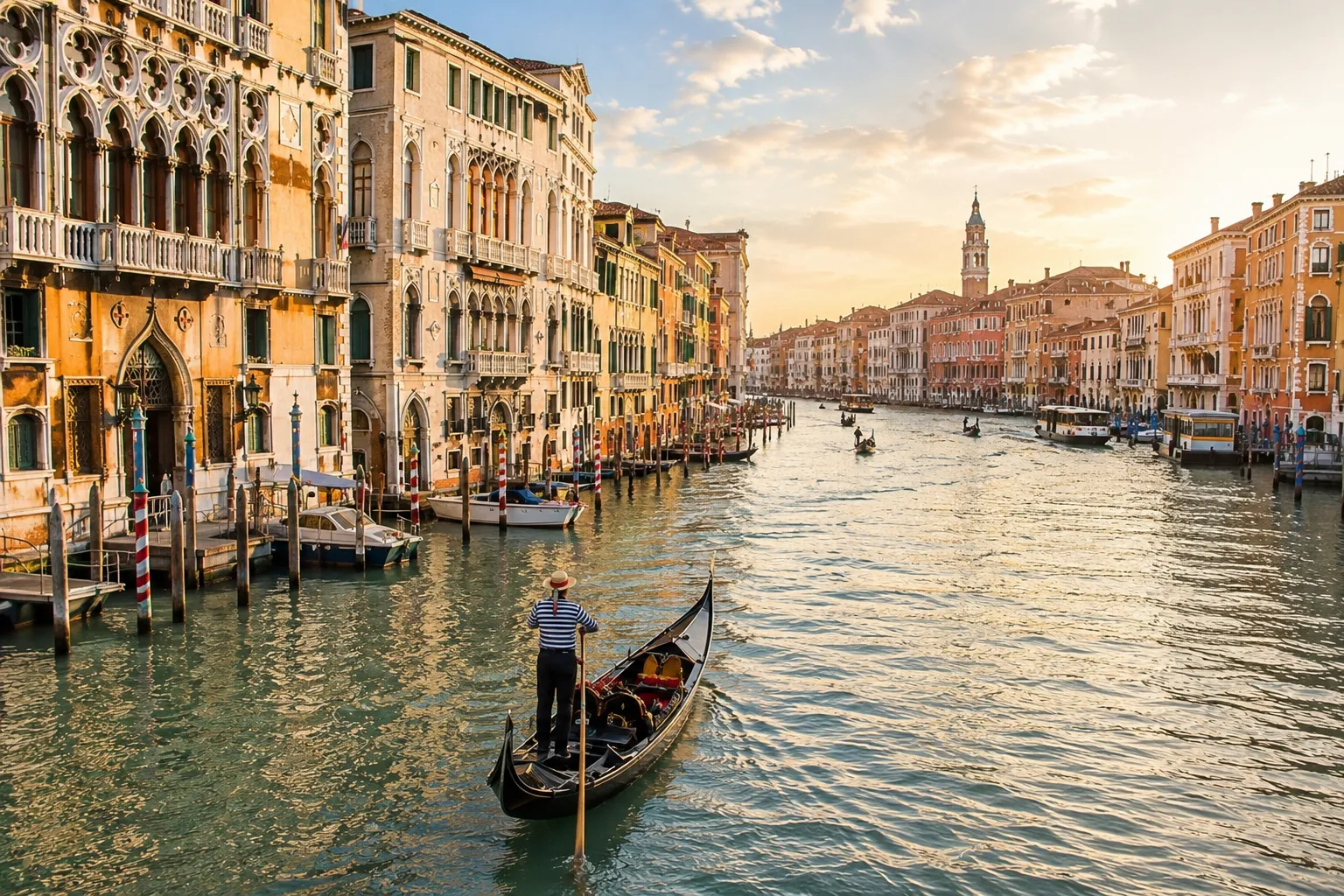
Begin at the Rialto Bridge and the nearby Rialto Market, the historic commercial center where Venetians have traded goods for centuries. Then take a gondola ride through the quieter, back canals, offering a close-up view of Venice’s architectural details and waterways.
Visit the Basilica di Santa Maria della Salute for its stunning Baroque architecture, massive dome, and masterpieces by Titian and Tintoretto. Requirements for respectful/modest attire apply at churches and other religious sites. Visitors should avoid disrupting religious observances and remain mindful of posted customs.
Afternoon
Head to the Peggy Guggenheim Collection, which showcases a collection of modern art in a Grand Canal palazzo.
Continue to the Gallerie dell’Accademia to explore masterpieces of Venetian painting from the Renaissance to the Baroque.
Spend time wandering through Dorsoduro, considered by some to be the cultural heart of Venice. Take a break for gelato at Campo Santa Margherita, a lively square lined with cafés frequented by locals. During your neighborhood exploration, stop by the Squero di San Trovaso, where artisans use traditional methods to build and repair gondolas.
Evening
Watch the sunset from the Ponte dell’Accademia, one of the city’s best vantage points over the Grand Canal.
Optional add-on: Take a pre-dinner stroll along Zattere, a waterfront promenade in Dorsoduro with lagoon views.
Enjoy an osteria dinner in Dorsoduro featuring local favorites, such as risotto al nero di seppia (squid ink risotto) or spaghetti alla busara (pasta with fresh seafood).
Day 3: Artisan Islands and Living Traditions
Explore the islands of the Venetian lagoon, where traditional crafts and colorful island life offer a different perspective on the city’s heritage.
Morning
Travel to Murano to see glassblowers at work and explore the Museo del Vetro, which traces the history and artistry of Venetian glassmaking.
Afternoon
Continue to Burano, known for its brightly painted houses and long tradition of lace-making, leaving time to browse local shops and explore the Lace Museum, or Museo del Merletto, to learn more about traditional lace-making.
Optional add-on: Travel to Torcello to visit the Cathedral of Santa Maria Assunta, known for its early Byzantine mosaics, providing insight into the history of settlement in the lagoon. Requirements for respectful/modest attire apply at churches and other religious sites. Visitors should avoid disrupting religious observances and remain mindful of posted customs.
Evening
Return to Venice and then head to San Giorgio Maggiore before sunset. Head up the Campanile di San Giorgio for panoramic views of Venice.
Return once again to Venice for a stroll along Riva degli Schiavoni, a waterfront promenade with views across the lagoon.
End your time in Venice with classical music at Chiesa della Pietà - Santa Maria della Visitazione. Another option for classical music is Chiesa di San Vidal.
Day 4: Verona's Roman Ruins and Medieval Courts
Step beyond Venice to explore Verona, a mainland city shaped by Roman origins and medieval rule, offering a contrast in urban form, history, and atmosphere.
Morning
Begin at the Arena di Verona, a well-preserved Roman amphitheater still used for performances today.
Optional add-on: Visit Juliet's House (Casa di Julietta), linked to Shakespeare’s Romeo and Juliet.
Continue through Piazza delle Erbe, the historic market square, then climb Torre dei Lamberti for city views. Visit the Arche Scaliger to see funeary monuments to the city’s medieval rulers.
Afternoon
Explore the Castelvecchio Museum, a fortress and museum that illustrates Verona’s military and artistic history, along with its striking bridge over the Adige River.
Evening
Take the Funicolare di Castel San Pietro to watch the sunset from Piazzale Castel San Pietro, offering panoramic views over the city’s rooftops and river.
Enjoy dinner in Verona, choosing a local specialty such as risotto all’Amarone (creamy rice cooked in a local red wine and Monte Veronese cheese) or lesso e pearà (boiled beef and vegetables served with a peppery breadcrumb-based sauce) before heading back to Venice.
Day 5: Venetian Master Painters and Aristocratic Splendor
From masterpieces by Venetian painters to a curtain call at Venice's most famous opera house, this day is a crescendo of art, aristocratic splendor, and timeless tradition.
Morning
Begin at the Scuola Grande di San Rocco, home to Tintoretto’s famous cycle of paintings, followed by the Basilica di Santa Maria Gloriosa dei Frari, which houses masterpieces by Titian and other Venetian artists. Requirements for respectful/modest attire apply at churches and other religious sites. Visitors should avoid disrupting religious observances and remain mindful of posted customs.
Afternoon
Visit Ca' Rezzonico, a Grand Canal palace that provides a glimpse into aristocratic life in Venice, with ornate interiors, frescoes, and furnishings that illustrate the wealth and cultural refinement of the city’s elite in the 18th century.
Evening
Optional add-on: Visit the Scala Contarini del Bovolo, a spiral staircase offering elevated views and a glimpse into Venice’s architectural creativity.
Head to a neighborhood trattoria for dinner featuring a Venetian classic such as fegato alla veneziana (calf's liver cooked with white onions, olive oil, and butter). End your time in Venice with an opera or other performance at the Teatro La Fenice.
Options for Bad Weather
In case of bad weather, visit the:
- Museo Correr to gain insight into the history, culture, and daily life of Venice’s maritime empire
- National Archaeological Museum, where ancient Roman portraits, Greek sculptures, and other treasures, including bronze items, coins, and gold, are on display
- Fondaco dei Tedeschi, once the headquarters and warehouse for German merchants, and now a luxury department store
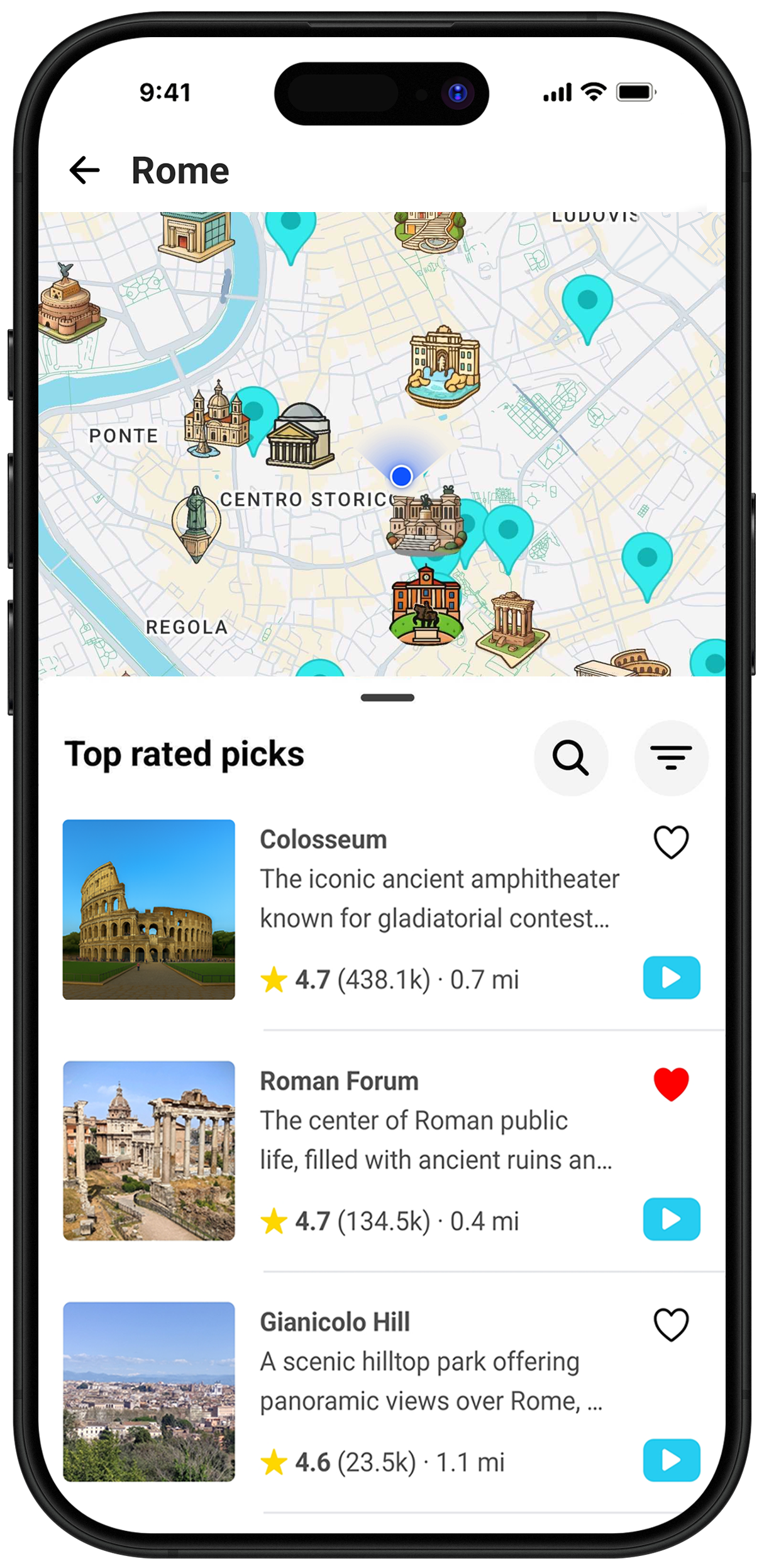
Make the most of your trip with the Travi App
Audio Guides
Professional narrated stories that you can listen to on your own schedule.
Snap & Learn
Point your camera at any monument to instantly identify it and hear its history.
Itineraries
Browse curated day-by-day plans, customize them to fit your style, or build your own from scratch and share with friends.