
2 Days in Venice: History and Memory
For travelers seeking an in-depth exploration of the maritime history of the city
2 Days in Venice: History and Memory
For travelers seeking an in-depth exploration of the maritime history of the city
Day 1: Maritime Power and State Control
Delve into how the Republic of Venice was a naval empire built on shipbuilding, long-distance trade, and control of key sea routes across the Mediterranean and Adriatic. Throughout the day, look for the Lion of St. Mark, the winged lion that marked Venetian authority across its territories and trading outposts.
Morning
Begin at St. Mark's Square, for a view of St. Mark's Basin, the broad waterfront where state galleys assembled and ceremonial departures took place.
Visit St. Mark’s Basilica, whose Byzantine-influenced domes and mosaics reflect Venice’s close artistic and commercial ties to the Eastern Mediterranean, as well as the accumulation of relics and treasures through trade and conquest. Requirements for respectful/modest attire apply at churches and other religious sites. Visitors should avoid disrupting religious observances and remain mindful of posted customs.
Continue to the Doge’s Palace, focusing on how the Republic governed its maritime empire through its trade networks, naval command structure, and diplomatic strategy. Take note of paintings that commemorate naval events, such as those in the Sala del Maggior Consiglio of the Battle of Lepanto.
Afternoon
Visit Chiesa di San Zaccaria, a church closely tied to state ceremonies and elite patronage, reflecting the intersection of religion and governance.
Continue to the Venetian Arsenal, the Republic’s vast state shipyard, known for its highly organized, assembly-line-style production of galleys that supported naval expansion.
Then explore the Museo Storico Navale, which displays ship models, navigational instruments, and artifacts illustrating Venice’s seafaring power.
Optional add-on: Visit the Scuola Grande di San Marco to learn about the role of civic and charitable institutions within Venetian society and medical history in Venice.
Evening
Explore Castello, a residential district historically associated with shipbuilders, sailors, and workers connected to the Arsenale. Enjoy an osteria dinner featuring local favorites that reflect Venice’s connection to the sea, such as risotto al nero di seppia (squid ink risotto) or spaghetti alla busara (spicy pasta with fresh seafood, typically shrimp or scampi in a tomato-based sauce).
Day 2: Trade Networks and Cosmopolitan Commerce
Explore how Venice’s maritime strength enabled extensive trade networks linking Europe with the Byzantine and Islamic worlds, shaping a cosmopolitan city.
Morning
Start at the Rialto Market and the nearby Rialto Bridge, the historic commercial center where goods from across the Mediterranean, such as spices, textiles, and seafood, were traded.
Visit the Fondaco dei Tedeschi, once the headquarters and warehouse for German merchants, illustrating Venice’s role as a hub for international commerce.
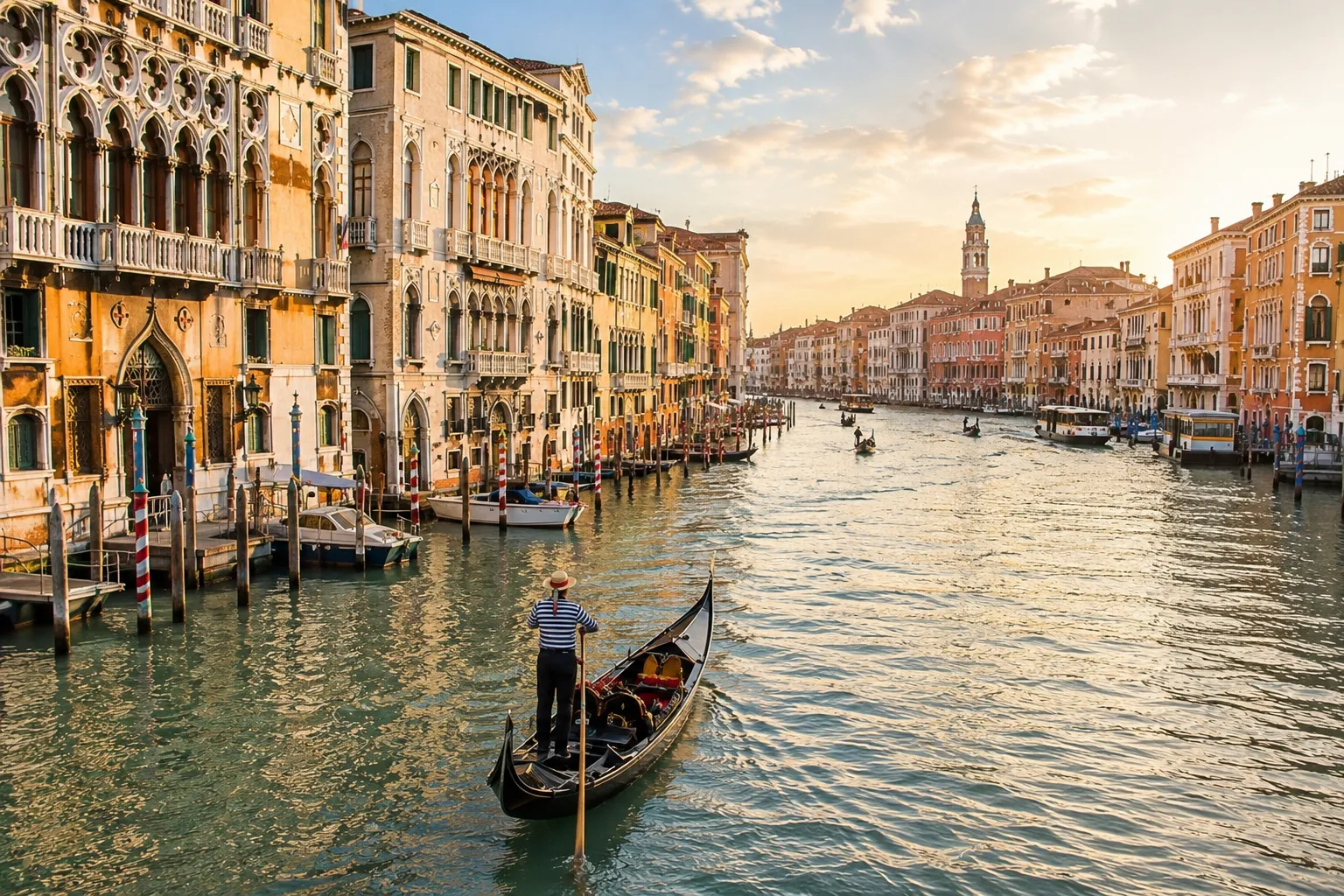
Then take a gondola or vaporetto ride through the canals, reflecting on how these waterways functioned as vital transport routes for goods and people and were integrated into the city’s defensive layout.
Continue on to Squero di San Trovaso, where artisans use traditional methods to build and repair gondolas.
Afternoon
Explore the Museo Correr to gain insight into the history, culture, and daily life of Venice’s maritime empire.
Optional add-on: Head to the Sinagoghe e Museo Ebraico di Venezia to explore the history of Jewish immigration to Venice and the community's role in the city's diverse commercial and cultural life. Requirements for respectful/modest attire apply at churches and other religious sites. Visitors should avoid disrupting religious observances and remain mindful of posted customs.
Evening
Head to Cannaregio for a cichetti crawl, sampling traditional small plates such as sarde in saor (sweet and sour sardines with onions, vinegar, raisins, and pine nuts), baccalà mantecato (creamy whipped cod spread typically served on bread), and bigoli in salsa (thick whole-wheat pasta with anchovy and onion sauce). Cichetti is thought to have originated as quick, affordable way for fishermen, merchants, and sailors to eat.
Options for Bad Weather
In case of bad weather, visit the National Archaeological Museum, where ancient Roman portraits, Greek sculptures, and other treasures, including bronze items, coins, and gold, are on display.
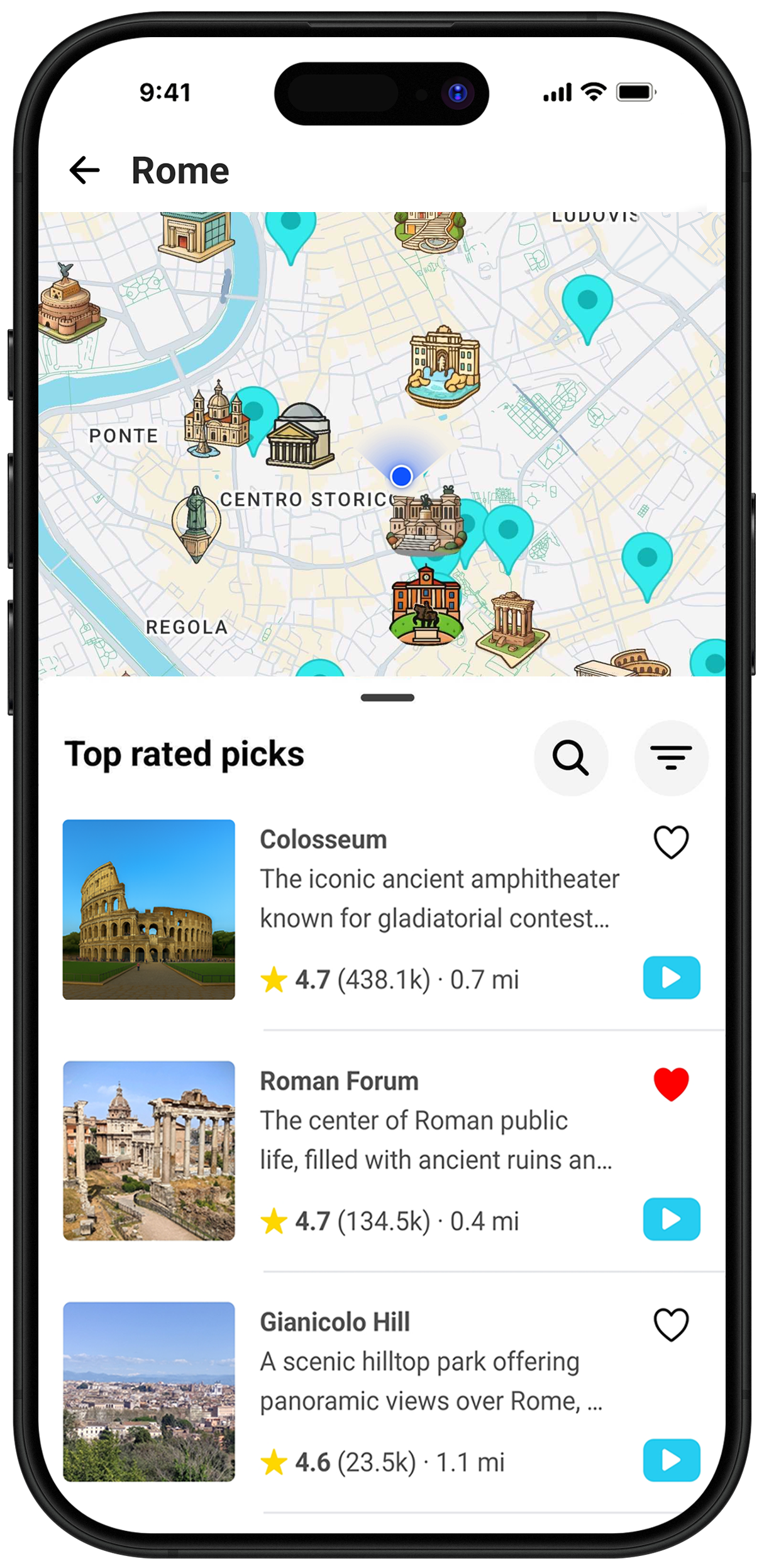
Make the most of your trip with the Travi App
Audio Guides
Professional narrated stories that you can listen to on your own schedule.
Snap & Learn
Point your camera at any monument to instantly identify it and hear its history.
Itineraries
Browse curated day-by-day plans, customize them to fit your style, or build your own from scratch and share with friends.