
4 Days in Seoul: History and Memory
For travelers seeking an in-depth exploration of the history of Seoul and Korea
4 Days in Seoul: History and Memory
For travelers seeking an in-depth exploration of the history of Seoul and Korea
Day 1: Ancient Korea
Explore Seoul's history before the dynasties to establish a historical foundation for this itinerary. Since some of the districts in Seoul are far apart, leave sufficient time for transit between them by public transit or taxi, especially during rush hour.
Morning
Begin at Amsa-dong Prehistoric Museum Site where Bronze Age pit dwellings excavated from the riverbank are among the oldest archaeological evidence of settlement in the Seoul area. The Han River setting connects the ancient settlement to the geography that has shaped Korean civilization across every era that follows.
Afternoon
Head to the National Museum of Korea, a comprehensive resource for Korean history. Explore the prehistoric, ancient, and medieval collections on the ground floor where the artifacts move from the Bronze Age through the Three Kingdoms period and into the Goryeo era.
Optional add-on: Visit the Seoul Museum of History for insight into the urban history of Seoul from prehistoric times through the modern era.
Evening
Head to Namsan section of the Seoul City Wall to see the surviving stretch of Seoul's original city wall along the southern ridge. Wander along the ramparts that formed the boundary of the Joseon capital.
Day 2: The Joseon Dynasty
Experience the full architectural and ceremonial reach of Korea's longest-ruling dynasty across its grandest palace, most sacred shrine, and most intimate surviving neighbourhood.
Morning
Begin at Gyeongbokgung Palace, the largest of the Joseon royal palaces, where stone courtyards stretch between painted wooden pavilions. Time your arrival for the Royal Guard Changing Ceremony at the main gate, which is a formal reconstruction of court ritual that lends context to the architecture surrounding it.
Optional add-on: Within the palace grounds, the National Folk Museum of Korea provides insight into everyday Joseon life.
Optional add-on: Between Gyeongbokgung and Jongmyo Shrine, Pimatgol alley was used by commoners during the Joseon era to avoid having to bow to aristocrats.
Continue to Jongmyo Shrine, where Joseon kings performed Confucian memorial rites for their ancestors. Its long wooden hall is considered one of the finest surviving examples of Korean ritual architecture. Requirements for respectful/modest attire apply at temples, mosques, and other religious sites. Visitors should avoid disrupting religious observances and remain mindful of posted customs.
Afternoon
Visit Changdeokgung Palace, a Joseon-era palace known for the way its architecture follows the natural contours of the hillside. Book in advance for the Secret Garden tour, where wooded paths, stone bridges, and lotus ponds occupy a rear garden that has been maintained largely unchanged for three centuries.
From here, head into Bukchon Hanok Village, where narrow, sloping streets are lined with restored wooden homes with tiled rooflines and inner courtyards glimpsed through wooden gates. Consider renting a hanbok, a traditional outfit with a flowing silhouette consisting of a draped jacket and a long skirt or pants, for a more immersive experience.
Evening
End the day in Insadong, where traditional crafts remain central in the form of galleries, teahouses, and small shops that are tucked into narrow alleys off the main street. You might find everything from calligraphy tools to celadon ceramics and hanji paper. Take a café break for traditional Korean tea or bingsu (shaved ice treat) and to have a quiet dinner.
Day 3: Fortress City and State Power
Explore the fortress city that stands as the fullest surviving expression of Joseon military and civic design.
Day
Head to Suwon Hwaseong Fortress and begin with the perimeter wall walk, which incorporates watchtowers and command posts. Then head to the Hwaseong Haenggung Palace, the largest of the Joseon temporary palaces built outside Seoul.
Optional add-on: Take time to visit Suwon Hyanggyo, the Joseon-era Confucian academy within the fortress city.
Visit the Suwon Hwaseong Museum to learn more about the history of the fortress as well as the building techniques used in constructing the fortress.
Evening
Upon your return to Seoul, head to a nearby jjimjilbang to experience the restorative combination of hot and cold pools, communal heated rooms, and bathhouse culture.
Day 4: Colonial Era and Modern Statehood
Lean about the transitions from the end of the Joseon dynasty through Japanese colonial rule to modern-day Korea. Since some of the districts in Seoul are far apart, leave sufficient time for transit between them by public transit or taxi, especially during rush hour.
Morning
Begin at Seodaemun Independence Park, where Dongnimmun Arch (Independence Gate) stands at the entrance to a park that has become the primary memorial space for Korea's independence movement.
Continue into Seodaemun Prison History Hall, the former Japanese colonial prison where thousands of Korean independence activists were detained, tortured, and executed. Use discretion when choosing which exhibits to visit, as some displays may be intense.
Optional add-on: Stop at Tapgol Park, where there are stone reliefs depicting the events the March 1st Independence Movement declaration.
Afternoon
Visit The War Memorial of Korea for an overview of Korean military history, with particular depth on the Korean War, across indoor galleries and an outdoor collection of equipment and monuments.
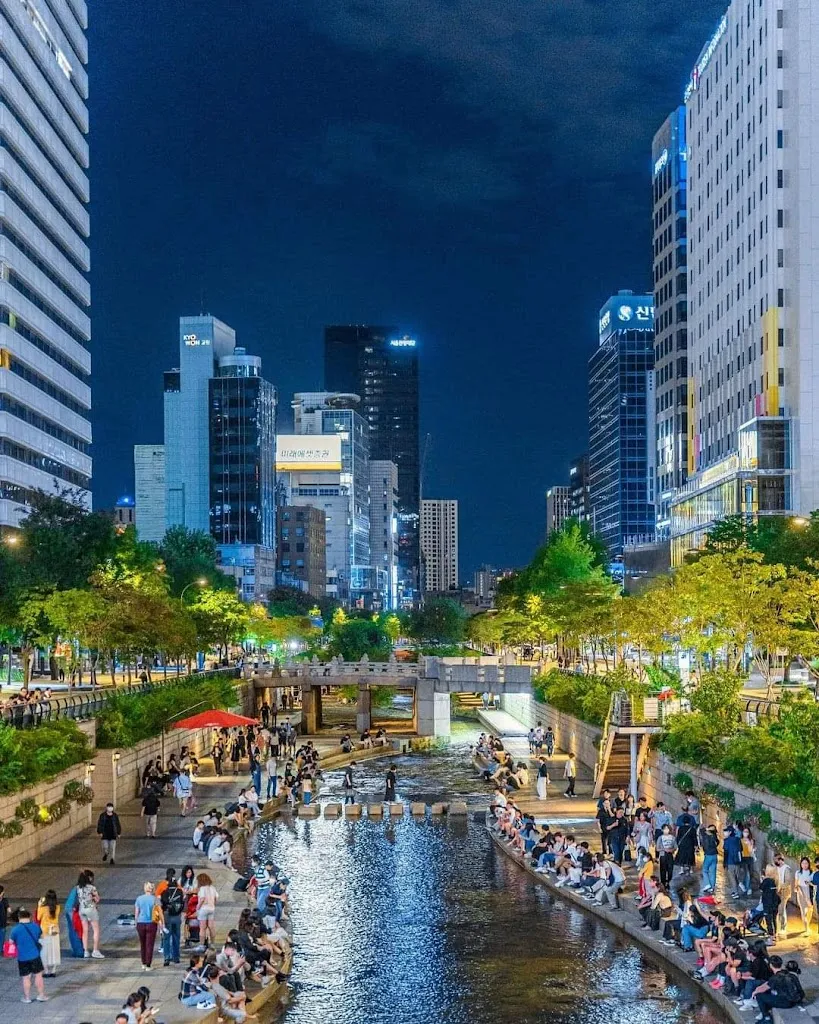
Optional add-on: Walk along Cheonggyecheon Stream, which was covered over during the colonial period and recently restored to its pre-colonial course.
Evening
Head to Deoksugung Palace, the smallest of the Seoul palaces. Explore its Western-style stone hall that was built in the early twentieth century as the Joseon court attempted to modernize in the face of Japanese pressure.
End the evening wandering Jeongdong-gil, with its cluster of surviving early modern buildings including Korea's first Western-style hotel, as well as Russian and American legation buildings.
Options for Bad Weather
In case of bad weather, visit the:
- National Palace Museum of Korea, which showcases royal seals, artifacts, and clothing of the Joseon Dynasty
- National Museum of Korean Contemporary History to learn about Korea’s rapid modernization and political history from the late 19th century to the present
- National Hangeul Museum to learn about the creation and history of the Korean alphabet
- Seoul City Wall Museum for more about the creation of the city wall
Optional Trip Extension
To extend your time in Seoul, join a guided visit to the Korean Demilitarized Zone, a buffer zone separating South Korea and North Korea. Most tours depart central Seoul early and include Imjingak Pyeonghwa-Nuri Park, the Third Tunnel, and Dora Observatory, where views extend across the buffer zone into North Korean territory.
Make the most of your trip with the Travi App
Audio Guides
Professional narrated stories that you can listen to on your own schedule.
Snap & Learn
Point your camera at any monument to instantly identify it and hear its history.
Itineraries
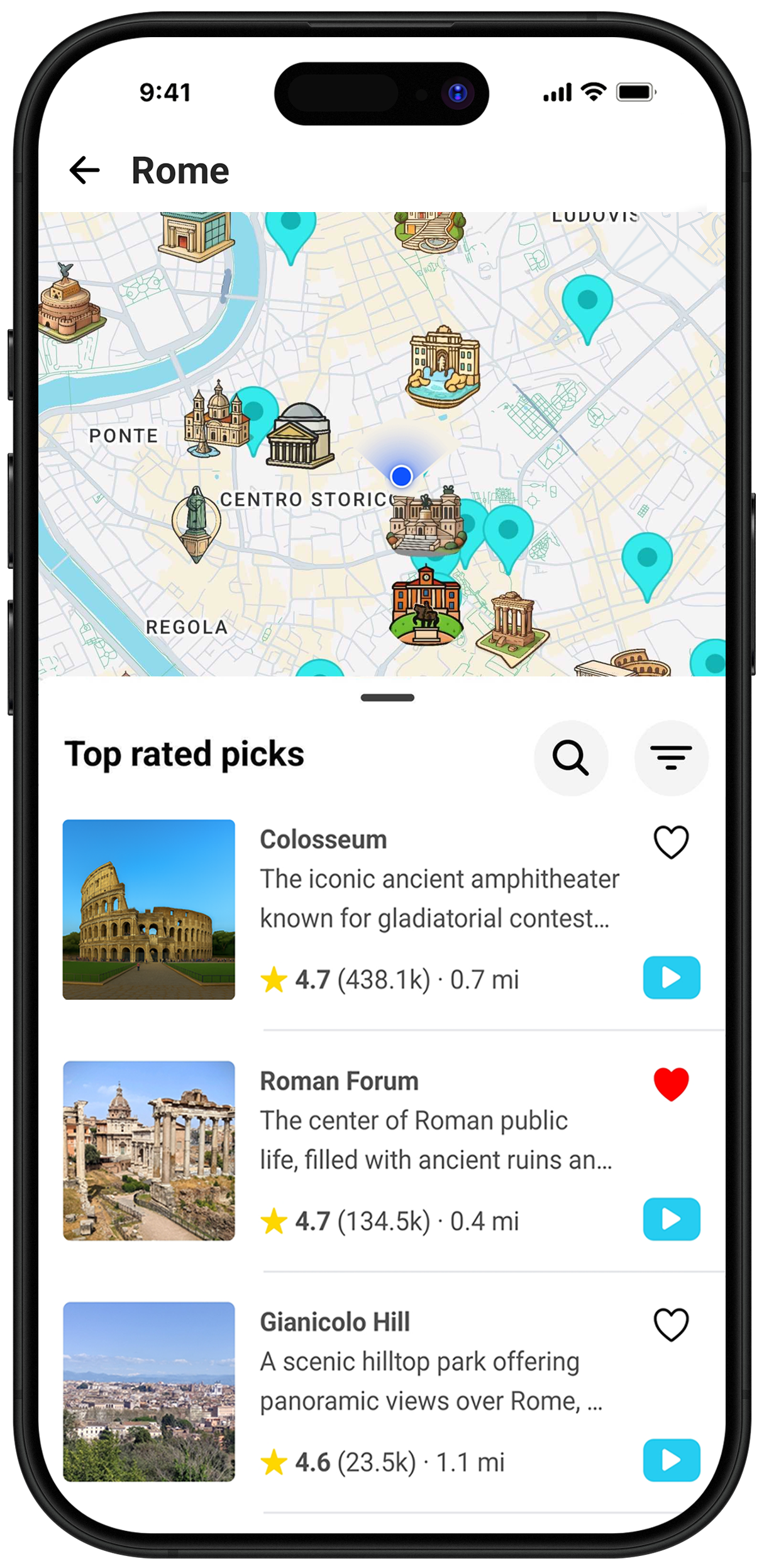
Browse curated day-by-day plans, customize them to fit your style, or build your own from scratch and share with friends.