
3 Days in Seoul: Pop Culture
For travelers interested in hallyu (the "Korean wave" or the growing popularity of Korean culture)
3 Days in Seoul: Pop Culture
For travelers interested in hallyu (the "Korean wave" or the growing popularity of Korean culture)
Day 1: Industry and Street-Level Culture
K-pop’s global influence is driven by a highly systematized industry, but its identity is shaped just as much by independent creative scenes on the ground. This day moves from design-forward neighborhoods to the youth energy of Hongdae, tracing how culture is produced, adapted, and performed at street level. Since some of the districts in Seoul are far apart, leave sufficient time for transit between them by public transit or taxi, especially during rush hour.
Morning
Make Seongsu-dong Café Street the starting point of your exploration of Seongsu-dong, a former manufacturing district now repurposed into a hub for independent cafés, Korean fashion labels, and design studios. These spaces, often set inside converted factories, reflect how Seoul’s creative economy continually reinvents its physical landscape.
Include a stop at Kwangya@Seoul for a highly produced environment where K-pop is translated into a retail and interactive experience through merchandise, albums, and curated fan engagement.
Afternoon
Make a brief stop for a photo op outside of HYBE Headquarters, the company behind BTS and a key force in scaling K-pop into a global industry.
Continue on to Hongdae, a district associated with youth culture, independent music, and street performance. Spend the afternoon exploring its independent streetwear boutiques, music shops, small galleries, and themed cafés, where creative expression unfolds in a more spontaneous and less structured way.
Optional add-on: Visit the Gyeongui Line Forest Park, a green space built along a converted railway corridor that is lined with street food vendors and independent cafés. It has featured in some popular Korean dramas.
Evening
Before dinner, take part in a K-pop dance class in Hongdae, where sessions are typically open to all levels and focus on current choreography. For dinner, find a spot for Korean BBQ, a social and interactive dining experience central to contemporary Korean food culture.
Afterwards, experience the nighttime energy of Hongdae at a norebang (karaoke room), where private rooms, percussion instruments, and extensive Korean and English song catalogs reflect another side of Korean pop culture.
Day 2: Design and Distribution
From large-scale retail complexes to luxury fashion streets and architectural landmarks, this day focuses on how K culture is packaged, scaled, and made visible. Since some of the districts in Seoul are far apart, leave sufficient time for transit between them by public transit or taxi, especially during rush hour.
Morning
Head to Gangnam, where COEX Mall functions as a commercial and retail hub concentrating K-pop merchandise, media, and fan-facing experiences. Within the complex, visit Starfield Library, a multistory installation of floor-to-ceiling bookshelves that has become one of Seoul’s most recognisable interior spaces.
Walk along K-Star Road to see the GangnamDol sculptures representing popular K-pop groups, a streetscape designed around fandom visibility and entertainment branding.
Optional add-on: Stop in at Yoojung Sikdang, a restaurant made famous as a place frequented by BTS during their trainee years.
Afternoon
Continue to Apgujeong Rodeo Street, where flagship boutiques, beauty brands, and carefully designed storefronts reflect the polished, image-driven side of Seoul’s fashion and entertainment industries.
In the late afternoon, head to Dongdaemun Design Plaza, one of Seoul’s most recognisable contemporary landmarks. Its fluid aluminium surfaces and continuously changing exhibitions position architecture itself as both spectacle and cultural platform.
Evening
As night falls, head to a riverside park such as Banpo Hangang Park. Pick up chimaek (fried chicken and beer) or snacks and drinks from a convenience store and find a place along the river to settle in for a picnic—an everyday ritual that has become one of Seoul’s most recognisable social experiences and a frequent setting in Korean dramas. Note that the Banpo Bridge rainbow fountain runs on a seasonal schedule.
Optional add-on: Visit the Lotte World Tower area, where integrated retail and entertainment spaces have served as filming locations across multiple drama genres.
Day 3: Drama Landscapes and the Contemporary City
Since K-drama has shaped how much of the world visualizes Korea, this day moves through settings that define that image before returning to one of the city’s most recognisable commercial districts.
Morning
Start the day in Bukchon Hanok Village, where narrow, sloping streets are lined with restored wooden homes featuring tiled rooflines and inner courtyards glimpsed through wooden gates. Though residential, the area has served as a backdrop for many historical dramas.
Consider renting a hanbok, a traditional outfit with a flowing silhouette consisting of a draped jacket and a long skirt or pants, for a more immersive experience.
Afternoon
Stop for lunch at Gwangjang Market, one of Seoul’s most iconic food markets, known for its dense rows of stalls serving dishes such as bindaetteok (mung bean pancakes) and mayak gimbap (mini seaweed rice rolls). The market’s atmosphere and food culture have been widely featured in Korean media.
Visit Gyeongbokgung Palace, the largest of Seoul’s royal palaces and one of its most recognizable historical landmarks. Its grand courtyards, ceremonial gates, and mountain backdrop have made it a frequent setting for historical dramas and a defining image of dynastic Korea.
Optional add-on: Take a short detour through Ikseon-dong Hanok Village, where narrow alleys of traditional hanok houses have been reimagined into cafés, dessert shops, and small restaurants. The area’s layered blend of old architecture and contemporary interiors has made it a popular setting for modern Korean dramas.
Evening
Take the cable car up Namsan to N Seoul Tower for panoramic views of the city framed by its surrounding mountains. The tower’s viewing platforms and lock wall have been featured in numerous K-dramas, often in romantic or climactic scenes.
End the evening in Myeongdong, where street food and K-beauty retail exist side by side. Flagship stores of brands such as Innisfree, Laneige, and Cosrx sit within a few blocks of stalls selling tteokbokki (spicy rice cakes), hotteok (sweet pancakes), and gyeran-ppang (egg bread), offering a final opportunity to experience both contemporary food culture and K-beauty shopping.
Options for Bad Weather
In case of bad weather, visit the:
- Lotte World Mall with its luxury mall and premium food court
- Korean Federation of Film Archives, which screens classic and contemporary films
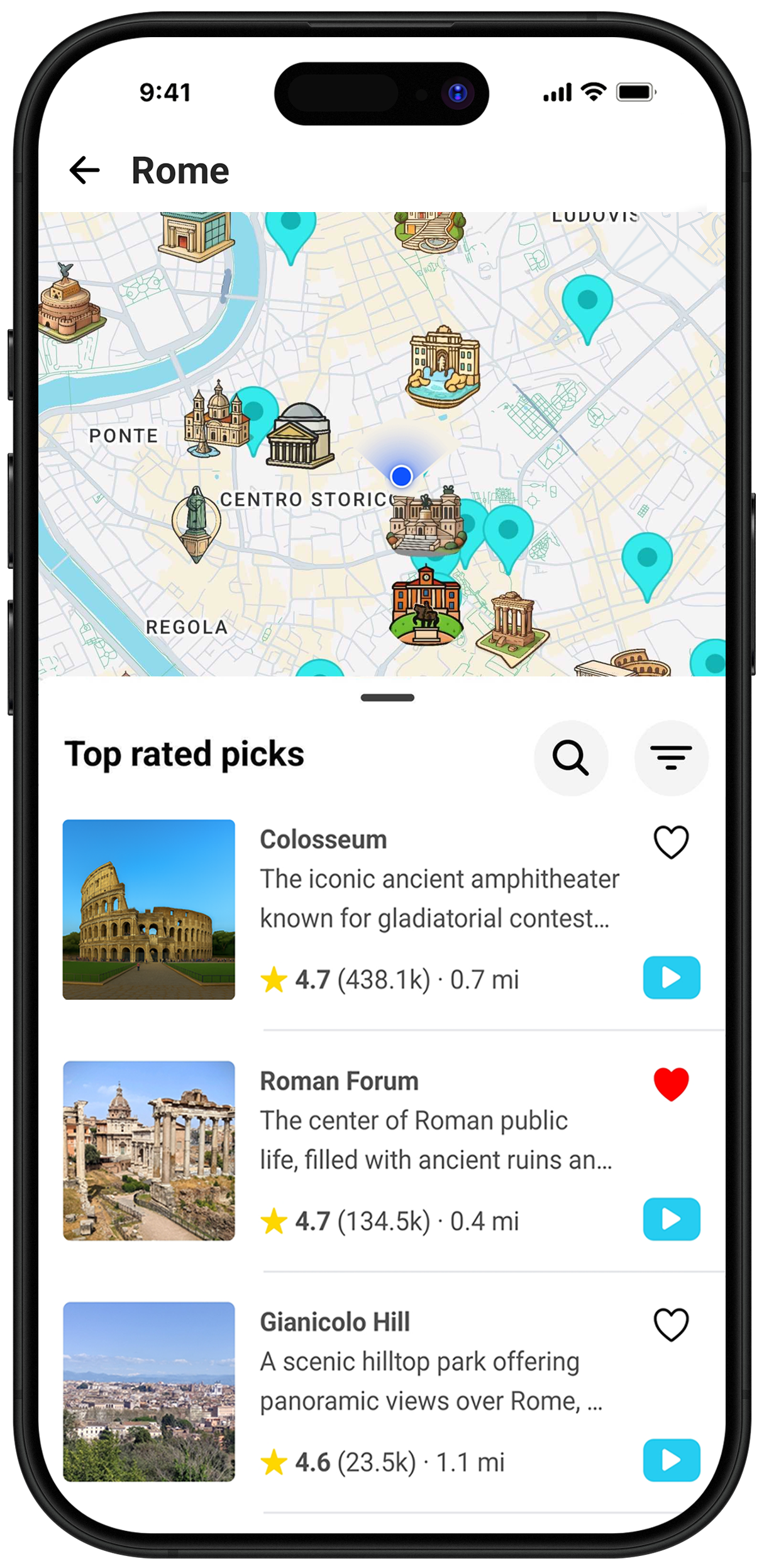
Make the most of your trip with the Travi App
Audio Guides
Professional narrated stories that you can listen to on your own schedule.
Snap & Learn
Point your camera at any monument to instantly identify it and hear its history.
Itineraries
Browse curated day-by-day plans, customize them to fit your style, or build your own from scratch and share with friends.