
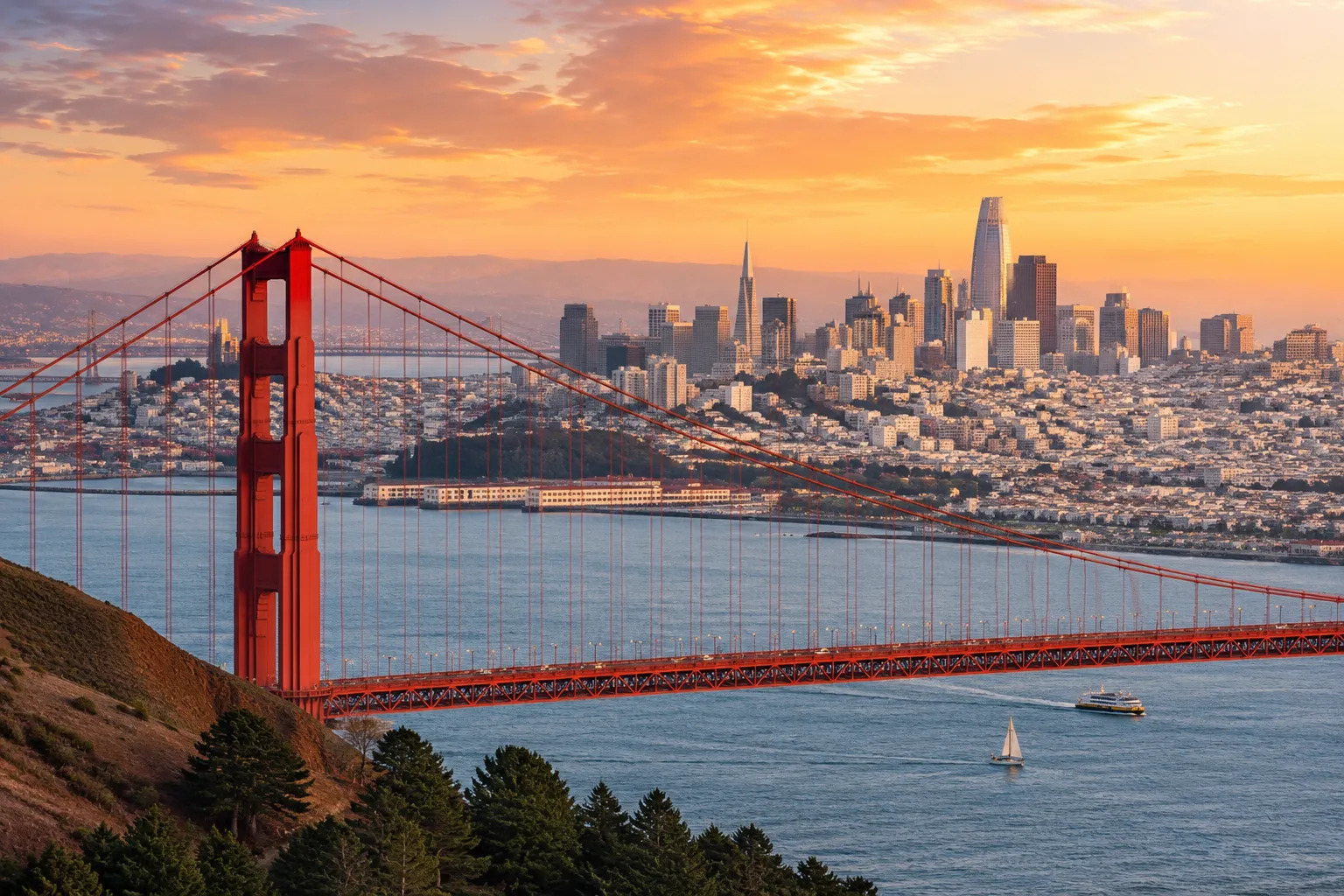
4 Days in San Francisco: History and Memory
For travelers seeking an in-depth exploration of the history of the city
4 Days in San Francisco: History and Memory
For travelers seeking an in-depth exploration of the history of the city
Day 1: Gold Rush Origins and Cultural Foundations
Discover the origins of San Francisco, from its waterfront transformation and Gold Rush boom to Chinatown's immigrant history, Victorian-era wealth, and the literary movements that reshaped American culture.
Look for bronze sidewalk medallions marking the Barbary Coast Trail, a self-guided route connecting Gold Rush-era buildings, immigrant neighborhoods, and earthquake landmarks throughout downtown.
Morning
Begin at the Ferry Building, where San Francisco's transformation from a small waterfront settlement began with rapid growth during and after the Gold Rush. The surrounding waterfront was expanded through landfill, with abandoned ships from the Gold Rush era incorporated into the city's foundations as the shoreline moved outward.
Continue to the nearby Jackson Square, one of San Francisco's oldest surviving neighborhoods. Its preserved brick buildings offer a glimpse of the city's early commercial center and the parts of San Francisco that survived the 1906 earthquake.
Stop by Lotta's Fountain, a landmark that became a gathering point for survivors after the 1906 earthquake and remains the site of the city's annual earthquake remembrance ceremony.
Afternoon
Explore Chinatown, one of North America's oldest and most historically significant Chinese communities. Begin at Dragon Gate San Francisco, then continue through Portsmouth Square Park, a gathering place since the city's earliest days.
Visit Tin How Temple, one of the oldest Chinese temples in the United States, and then explore the neighborhood's historic streets and alleys, such as Waverly Place and Spofford Street, where colorful buildings and narrow lanes reveal the neighborhood's layered history.
Continue to the Chinese Historical Society of America Museum, where exhibits explore Chinese immigration, exclusion laws, earthquake rebuilding, and the community's lasting influence on San Francisco.
Optional add-on: Visit Old Saint Mary's Cathedral, a Gold Rush-era landmark with connections to both early San Francisco and the city's Chinese immigrant community.
Late Afternoon/Evening
Visit the San Francisco Railway Museum, where historic machinery demonstrates how San Francisco's cable car system continues to operate. The cable cars represent the city's expansion into its steep hills after the Gold Rush.
Board the historic Powell–Hyde San Francisco Cable Car, riding through the city's famously steep streets toward Nob Hill, once home to railroad magnates and some of San Francisco's wealthiest families.
Optional add-on: Continue to Grace Cathedral, known for its Gothic-inspired architecture and peaceful interior, and past the Fairmont San Francisco, a hotel that serves as a reminder of San Francisco's Gilded Age.
Finish the evening in North Beach, San Francisco's historic Italian neighborhood and a center of literary and artistic experimentation. Browse the shelves of City Lights Booksellers & Publishers, one of America's most influential independent bookstores and a birthplace of the Beat Generation literary movement.
Optional add-on: Visit Vesuvio Café, a historic gathering place for Beat writers, artists, and musicians.
Day 2: Island History and Voices of Equality
Explore one of America's most famous prisons before discovering neighborhoods that became centers of social change, activism, and community identity.
Morning/Early Afternoon
Take an early ferry to Alcatraz Island, where a self-guided audio tour brings the island's complex history to life through stories from former guards, inmates, and residents.
Beyond its infamous federal prison era, Alcatraz reveals several layers of history:
- military fortress protecting San Francisco Bay
- federal penitentiary housing some of America's most notorious prisoners
- site of the Native American occupation of 1969–71
- national park preserved as a place of historical reflection
Advance reservations are strongly recommended, especially during peak travel seasons.
Late Afternoon/Evening
Continue to The Castro District, a historically significant LGBTQ+ neighborhood. Visit the GLBT Historical Society Museum, where exhibits explore LGBTQ+ activism, community organizing, and the neighborhood's role in changing American social history.
Optional add-on: Explore Harvey Milk Plaza, a gathering place and rally site, and stop at The Castro Theatre, a community cultural hub.
Walk along the Rainbow Honor Walk, which recognizes influential LGBTQ+ figures throughout history, and then stop at The Castro Camera and Harvey Milk Residence, where Harvey Milk ran his political campaign and organized community activism.
Enjoy dinner in the Castro and experience one of San Francisco's most vibrant neighborhoods after dark.
Day 3: Counterculture and Community Voices
Discover San Francisco's tradition of social movements, creative expression, and neighborhood identity through the Summer of Love, Latino heritage, public art, and community activism.
Morning
Begin in Haight-Ashbury, the neighborhood most closely associated with San Francisco's 1960s counterculture movement. Walk along Haight Street, where music, art, and alternative lifestyles helped define the Summer of Love.
Continue into Golden Gate Park and Hippie Hill, where large gatherings, concerts, and cultural events made the park an important center of the counterculture movement.
Optional add-on: Visit the Conservatory of Flowers, one of the last large-scale Victorian glass and wood greenhouses in the country.
Afternoon
Spend the afternoon exploring the Mission District, one of San Francisco's most dynamic neighborhoods and a center of Latino culture, community activism, and public art. For lunch, try one of San Francisco's signature culinary creations, a Mission-style burrito. La Taqueria is a perennial local favorite, although excellent alternatives can be found throughout the neighborhood.
Head to the neighborhood's renowned murals at Balmy Alley and Clarion Alley Street Art, where colorful artwork reflects social movements, immigration, and local history. Then visit Mission San Francisco de Asis, the city's oldest surviving building.
Continue to Mission Dolores Park, a popular gathering place offering some of the city's best skyline views.
Evening
Explore Japantown, where the Japan Center Malls and Japantown Peace Plaza reflect the history of Japanese immigration, wartime incarceration, and postwar rebuilding.
Optional add-on: Explore the Fillmore District, once known as the “Harlem of the West” for its influential jazz clubs and African American cultural life. The neighborhood also reflects the complex history of Japanese American displacement and urban redevelopment.
Day 4: Oakland’s Civil Rights Legacy and Waterfront
Explore Oakland's pivotal role in the Civil Rights Movement before discovering its historic waterfront, presidential history, and vibrant public spaces that reflect the city's enduring spirit.
Morning
Optional add-on: Begin at the North Oakland Senior Center, which formerly served as the Merritt College campus, the location where as students Huey P. Newton and Bobby Seale met before co-founding the Black Panther Party.
Visit DeFremery Park, a gathering place for the Black Panther Party and the site of many of its community initiatives, including free breakfast programs, political education classes, and neighborhood outreach.
Continue to the African American Museum and Library at Oakland, whose exhibits preserve and celebrate the history, culture, and achievements of Oakland's African American community through photographs, archives, and rotating exhibitions.
Next, visit the Black Panther Party Museum, where exhibits trace the origins, leadership, community programs, and lasting legacy of the Black Panther Party. Through photographs, artifacts, historical documents, and multimedia displays, the museum explores the movement's campaigns for racial justice, community empowerment, education, and social change.
Optional add-on: Stop outside Rene Davidson, Alameda County Superior Courthouse, which was the site of the "Free Huey" rallies during Newton's trial and subsequent appeals, which drew national attention.
Afternoon
Head to Jack London Square, Oakland's historic waterfront district named after the celebrated author who spent much of his youth here.
Browse the shops and waterfront promenades before boarding the nearby USS Potomac, Franklin D. Roosevelt's presidential yacht, where guided tours offer a glimpse into presidential history, diplomacy, and life aboard the "Floating White House."
Continue to the Oakland Museum of California, whose collections explore California's art, history, and natural environment. Particularly noteworthy are the exhibits examining Oakland's diverse communities, the Civil Rights Movement, and the Black Power movement.
Evening
Before heading back to San Francisco, spend some time walking around picturesque Lake Merritt, the United States' first officially designated wildlife refuge. Encircled by parks, gardens, and a lively waterfront promenade, the lake is one of Oakland's favorite gathering places and offers beautiful views as the city begins to light up.
Optional add-on: If schedules align, take in a performance at the restored Fox Theatre, an Art Deco landmark that remains one of Oakland's premier performing arts venues.
Bad Weather Options:
In case of bad weather, visit the:
- San Francisco City Hall to learn about the city's civic history and recovery following the 1906 earthquake
- Museum of the African Diaspora to explore the history, art, and cultural contributions of people of African descent through exhibitions exploring identity, migration, and the global African diaspora
- Walt Disney Family Museum to learn about the life, creativity, and legacy of Walt Disney through engaging interactive exhibits
Optional Trip Extension: Berkeley
To extend your time in San Francisco, consider adding a day trip to Berkeley, a city known for its university, activism, and independent culture.
Visit locations associated with activism and the Free Speech Movement, such as Upper Sproul Plaza, Sather Gate, and the Mario Savio Steps on the University of California, Berkeley campus. Also explore Telegraph Avenue, a longtime center of student activism, bookstores, and counterculture.
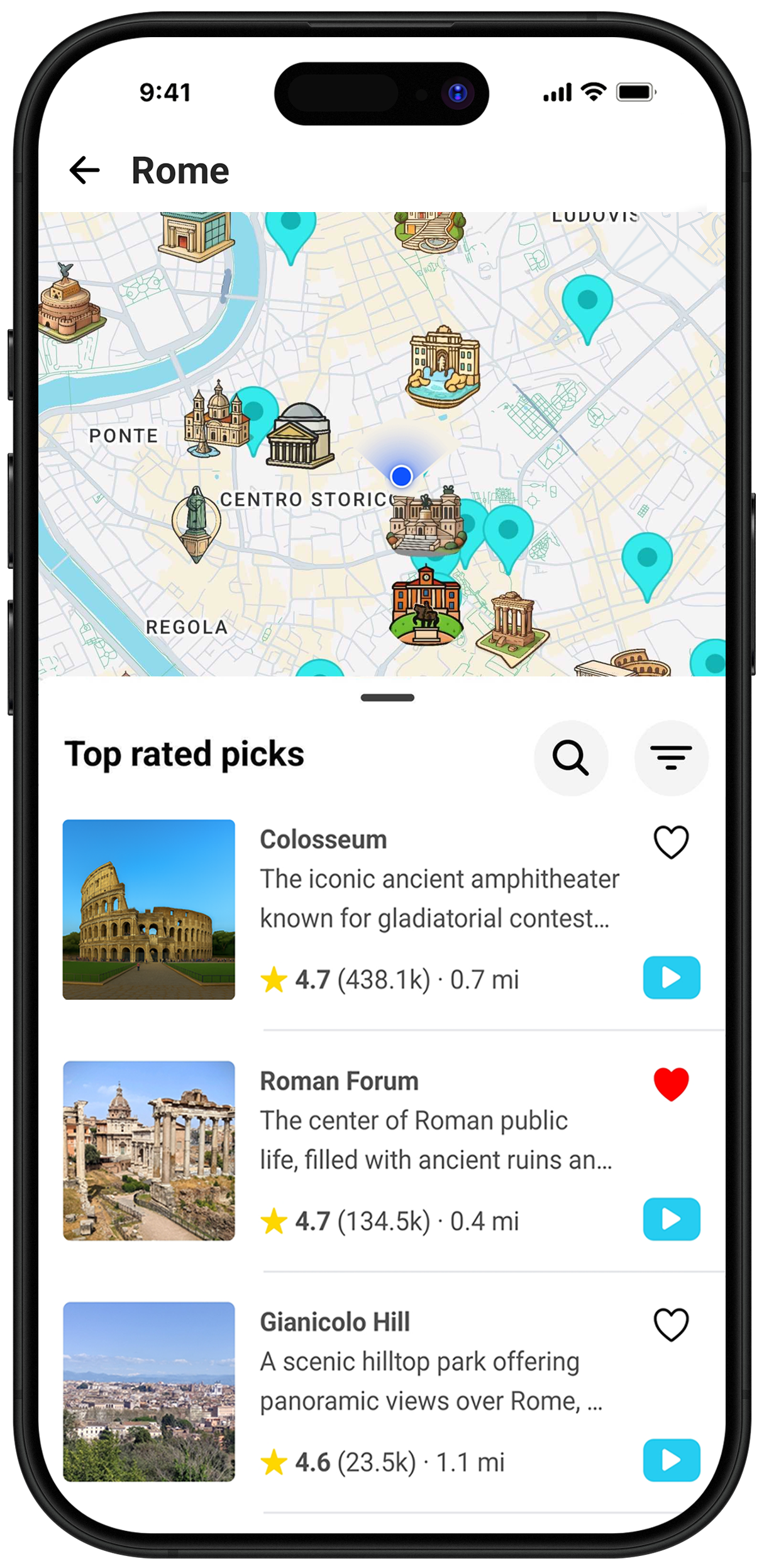
Make the most of your trip with the Travi App
Audio Guides
Professional narrated stories that you can listen to on your own schedule.
Snap & Learn
Point your camera at any monument to instantly identify it and hear its history.
Itineraries
Browse curated day-by-day plans, customize them to fit your style, or build your own from scratch and share with friends.