

4 Days in Naples: History and Memory
For travelers seeking an in-depth exploration of the history of the city
4 Days in Naples: History and Memory
For travelers seeking an in-depth exploration of the history of the city
Day 1: Royal Heritage and Historic Power
Explore the monuments of the Kingdom of Naples, from grand Bourbon palaces and medieval castles to elegant piazzas that reflect centuries of political power and cultural influence.
Morning
Begin in Piazza del Plebiscito, Naples' grand ceremonial square, where sweeping colonnades and monumental architecture reflect the city's importance as the capital of the Kingdom of Naples.
Overlooking the piazza, the Royal Palace of Naples offers an introduction to the Bourbon dynasty through its lavish state apartments, royal chapel, monumental staircase, and richly decorated reception rooms filled with paintings, tapestries, porcelain, and period furnishings.
Continue next door to Teatro di San Carlo, the world's oldest continuously operating opera house. A guided tour reveals its opulent horseshoe-shaped auditorium, royal boxes, and beautifully preserved interiors that have welcomed audiences since 1737.
Optional add-on: Visit Galleria Umberto I, a nineteenth-century shopping arcade distinguished by its soaring glass dome, intricate ironwork, and elegant mosaic floors. Although built long after the Bourbon era, it remains one of Naples' architectural landmarks.
Afternoon
Walk to Castel Nuovo (Maschio Angioino), the medieval fortress that has symbolized royal authority for many centuries. Admire its distinctive triumphal marble arch celebrating Alfonso V of Aragon before exploring the castle's courtyards, towers, and museum, where exhibits trace Naples' medieval and Renaissance history.
Continue to the Quartieri Spagnoli, which was originally laid out during Spanish rule in the sixteenth century to house military garrisons.
Optional add-on: Ride the funicular to Castel Sant'Elmo, the city's distinctive star-shaped hilltop fortress. Its ramparts provide panoramic views across Naples, Mount Vesuvius, the Bay of Naples, and the surrounding coastline, emphasizing the city's strategic military importance through the centuries.
Evening
Conclude the day with walk toward Castel dell'Ovo, Naples' oldest castle, dramatically situated on the former island of Megaride. According to local legend, the Roman poet Virgil concealed a magical egg within its foundations to protect the city from disaster.
Day 2: Pompeii's Ancient Civilization and Buried Legacy
Step back thousands of years as you explore one of the world's most extraordinary archaeological sites, discovering remarkably preserved streets, homes, and public buildings frozen in time by the eruption of Mount Vesuvius.
Day
Travel by train to Pompeii Archaeological Park, entering through Porta Marina e Cinta Muraria, one of the city's principal gateways. As you pass through the ancient entrance, imagine the bustling movement of merchants, travelers, and citizens who once crossed these same streets thousands of years ago.
Optional add-on: Before entering the main archaeological area, visit the Villa of the Mysteries (Villa dei Misteri), one of Pompeii's finest suburban villas with its preserved fresco cycle depicting initiation rites.
Continue into the heart of Pompeii at the Forum of Pompeii, once the political, religious, and commercial center of the city, before exploring the adjacent Basilica, where legal proceedings and commercial transactions once took place.
Nearby, admire the Temple of Jupiter, dedicated to the king of the Roman gods, and the Macellum, Pompeii's central marketplace, where vendors sold meat, fish, produce, and other daily necessities.
Afternoon
Explore the grand House of the Faun (Casa del Fauno), renowned for its scale and exquisite mosaics. Continue to the House of the Tragic Poet, celebrated for its preserved mosaics, including the famous Cave Canem ("Beware of the Dog") entrance mosaic.
Pause at the Panificio di Popidio Prisco, where ancient mills, ovens, and bakery equipment demonstrate how bread was produced for the city's residents, before continuing on to the House and Thermopolium of Vetutius Placidus, an ancient takeaway food counter preserved with serving vessels still embedded in its stone countertop.
Head to the Stabian Baths (Terme Stabiane), among the oldest surviving Roman bath complexes. Then walk along Via dell'Abbondanza, the city's principal commercial street, where stone stepping blocks, shopfronts, homes, and workshops illustrate the rhythm of everyday life.
Continue to the Teatro PIccolo designed for more intimate musical performances, poetry readings, and civic gatherings.
End your visit at the Amphitheatre of Pompeii, one of the oldest surviving Roman amphitheatres, and at the Garden of the Fugitives (Orto dei Fuggiaschi), where plaster casts preserve the final moments of victims who attempted to escape the catastrophic eruption.
Optional add-on: Visit the Antiquarium of Pompeii to view artifacts recovered from the ancient city, including everyday objects, frescoes, and exhibits explaining the history of the eruption and ongoing archaeological discoveries.
Evening
Return to Naples and unwind with an aperitivo or dinner in the Naples Historic Center, also called the Centro Storico, among lively piazzas and bustling cafés.
Day 3: Sacred Traditions and Hidden Histories
Discover the spiritual heart of Naples through magnificent churches, underground archaeological layers, and centuries of religious traditions that continue to shape the city's identity.
Morning
Optional add-on: Begin at the Catacombe di San Gennaro, an early Christian burial complex featuring ancient frescoes, underground basilicas, and the original tomb of Naples’ patron saint.
Optional add-on: Visit the Cimitero delle Fontanelle, a unique ossuary reflecting Naples’ traditions of remembrance and popular devotion.
Visit Duomo di Napoli, including the Royal Chapel of the Treasure of San Gennaro, home to precious reliquaries, silver works, and the traditions surrounding the saint’s famous miracle. Requirements for respectful/modest attire apply at churches, synagogues, and other religious sites. Visitors should avoid disrupting religious observances and remain mindful of posted customs.
Walk along Via dei Tribunali, the ancient Roman route lined with historic churches, pizzerias, artisan workshops, and centuries-old buildings.
Optional add-on: Explore Complesso Monumentale San Lorenzo Maggiore - Napoli, where excavations reveal a preserved Roman marketplace beneath the church.
Late Morning/Afternoon
Descend into Napoli Sotterranea to explore Greek quarries, Roman aqueducts, early Christian spaces, and World War II shelters hidden beneath the city.
Visit Museo Cappella Sansevero, one of Naples’ greatest artistic treasures, famous for Giuseppe Sanmartino’s breathtaking Veiled Christ and its combination of art, science, and mystery.
Complete the afternoon at Complesso Monumentale Santa Chiara, where Gothic architecture, peaceful cloisters, and colorful majolica decoration provide a contrast to the surrounding streets.
Evening
Spend the evening in Piazza Bellini, where ancient Greek walls meet cafés and restaurants, before wandering through the illuminated streets of the Naples Historic Center, also called the Centro Storico, and enjoying traditional Neapolitan cuisine.
Day 4: Herculaneum's Roman Legacy and Archaeological Treasures
Complete your exploration of ancient Campania with Herculaneum’s remarkably preserved ruins and the masterpieces recovered from Pompeii and Herculaneum.
Morning
Travel to Herculaneum Archaeological Park, where volcanic mudflows preserved wooden doors, balconies, furniture, and frescoes in extraordinary condition.
Begin at the House of the Deer, one of the town's grandest seaside villas, where spacious courtyards, marble sculptures, and panoramic terraces overlook the ancient coastline. Continue to the House of Neptune and Amphitrite, celebrated for its colorful glass mosaics and preserved household shrine.
Next, visit the House of the Wooden Sacellum, where a rare surviving wooden folding screen provides a glimpse into Roman domestic interiors. Continue to the College of the Augustales (Herculaneum), where richly painted walls and religious spaces illustrate the importance of emperor worship in Roman civic life.
Explore the Suburban Baths, whose changing rooms, heated chambers, and decorative details remain well preserved.
Optional add-on: End at the ancienct shoreline where the remains of hundreds of residents who sought refuge from the eruption were discovered during archaeological excavations.
Afternoon
Return to Naples to explore the National Archaeological Museum of Naples, one of the world’s greatest collections of Roman antiquities. Admire the Farnese Collection, Pompeian frescoes, and the Alexander Mosaic from the House of the Faun, while the Secret Cabinet and Egyptian Collection provide further insight into Roman culture and Mediterranean exchange.
Optional add-on: Visit the Villa of the Papyri Bronzes or explore the Numismatic Collection tracing centuries of political and economic history.
Evening
Celebrate your final evening in Naples with dinner in the historic center or along the waterfront, reflecting on the city’s extraordinary layers of royal, religious, and archaeological history.
Options for Bad Weather
In case of bad weather, visit the:
- Certosa e Museo di San Martino, a preserved former monastery featuring cloisters, Neapolitan art, historic naval displays, and panoramic views over Naples
- Museum of the Treasure of San Gennaro to see jeweled reliquaries, silver works, manuscripts, and ceremonial objects connected to Naples’ patron saint
Optional Trip Extension
To extend your time in Naples, consider adding a day trip to the Royal Palace of Caserta, a UNESCO World Heritage Site that is often compared to the Palace of Versailles. Explore the lavish royal apartments, including the monumental Grand Staircase, the Palatine Chapel, the Throne Room, and richly decorated reception halls that showcase the power and elegance of the Bourbon dynasty.
After touring the palace, stroll through the beautifully landscaped formal gardens, where elegant fountains, sculptures, and long tree-lined avenues stretch toward the distant hills.
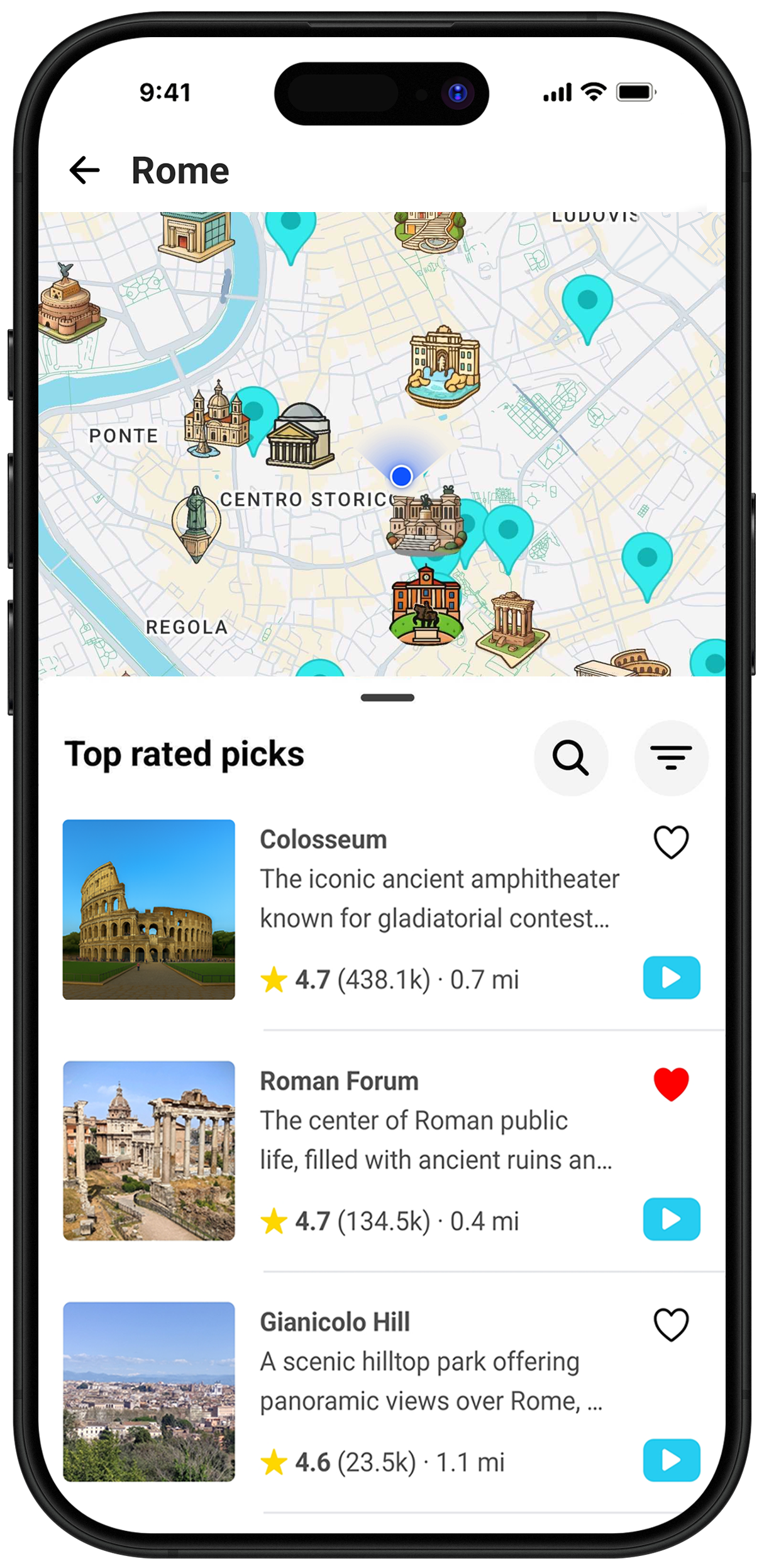
Make the most of your trip with the Travi App
Audio Guides
Professional narrated stories that you can listen to on your own schedule.
Snap & Learn
Point your camera at any monument to instantly identify it and hear its history.
Itineraries
Browse curated day-by-day plans, customize them to fit your style, or build your own from scratch and share with friends.