
3 Days in Munich: History & Culture
For travelers who want Munich’s royal past, civic history, Bavarian identity, and the layered story of a city shaped by monarchy, war, reconstruction, and tradition
3 Days in Munich: History & Culture
For travelers who want Munich’s royal past, civic history, Bavarian identity, and the layered story of a city shaped by monarchy, war, reconstruction, and tradition
Day 1
Morning
Begin in Marienplatz, where Munich’s civic and historical identity has been anchored for centuries. The Neues Rathaus/New Town Hall dominates the square with its ornate Neo-Gothic façade, while the Glockenspiel marks time in a way that blends performance with tradition. The surrounding streets form the original medieval core, where narrow lanes and irregular squares still reflect the city’s early layout.
Continue to Frauenkirche, one of Munich’s most recognisable landmarks. Its twin towers not only define the skyline but also reflect the city’s rebuilding after wartime destruction, where restoration became part of identity rather than simple preservation.
Afternoon
Move into Viktualienmarkt, where history shifts into everyday continuity. The market has existed in various forms for centuries and remains a central point of daily life in the city. Lunch here is part of the cultural experience rather than a break from it, surrounded by local trade, food traditions, and seasonal Bavarian produce.
Afterward, continue through St. Peter’s Church, Munich’s oldest parish church, and nearby streets that still preserve fragments of medieval structure beneath later architectural layers.
Evening
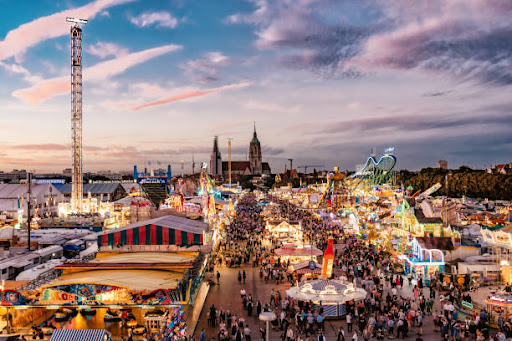
As evening approaches, experience Munich’s beer hall culture in its historical form. Places like Hofbräuhaus are not just dining spaces but long-standing civic institutions where Bavarian identity is performed through music, food, and communal seating.
Day 2
Morning
Begin at the Munich Residenz, the former seat of Bavarian rulers. The palace reflects centuries of expansion, with rooms ranging from restrained early structures to highly ornate Rococo and Renaissance halls. It is less a single palace and more a physical record of shifting power and aesthetic influence.
Step out into Odeonsplatz, where royal architecture opens into formal civic space. The square reflects Munich’s transformation from ducal residence to capital of a kingdom, marking a key shift in scale and ambition.
Afternoon
Continue into the English Garden, originally designed during the Enlightenment as a public green space. Its openness contrasts sharply with the structured formality of royal Munich. Walking toward the Eisbach wave, where surfers ride a continuous current in the city center, highlights how Munich has adapted historical space into modern cultural use.
The garden itself reflects changing political ideas: from controlled royal landscape to democratic public space.
Evening
Spend the evening in a traditional beer garden, where Munich’s cultural continuity becomes most visible. Shared tables, local food, and informal atmosphere reflect traditions that have remained largely unchanged despite the city’s political and historical shifts.
Day 3
Morning
Begin at the Munich Documentation Centre for the History of National Socialism. This is one of the most important historical institutions in the city, addressing Munich’s role in the rise of the Nazi regime. The building itself sits on the site of the former Nazi party headquarters, making the location as significant as the exhibition.
Afternoon
Move into Königsplatz and the surrounding district, where neoclassical architecture was appropriated during the Nazi period and later recontextualised in postwar Munich. The area reflects how architecture can be reinterpreted across political eras.
Continue toward the Pinakothek district or nearby cultural institutions, where postwar reconstruction and cultural investment reshaped Munich into a major European art and education center.
Evening
Conclude in Maxvorstadt or the Old Town, where modern Munich blends memory, reconstruction, and everyday life. The contrast between historical weight and present-day normalcy defines the city’s identity more than any single monument.
In case of bad weather
If weather limits movement, Munich’s historical and cultural depth remains fully accessible indoors:
- Munich Residenz and Treasury
- NS Documentation Centre
- Alte Pinakothek and Pinakothek der Moderne
- Deutsches Museum
- Bavarian National Museum
- Frauenkirche interiors
- Viktualienmarkt covered areas
- Traditional beer halls (Hofbräuhaus, Augustiner)
- Bavarian State Opera
- City museums and archives
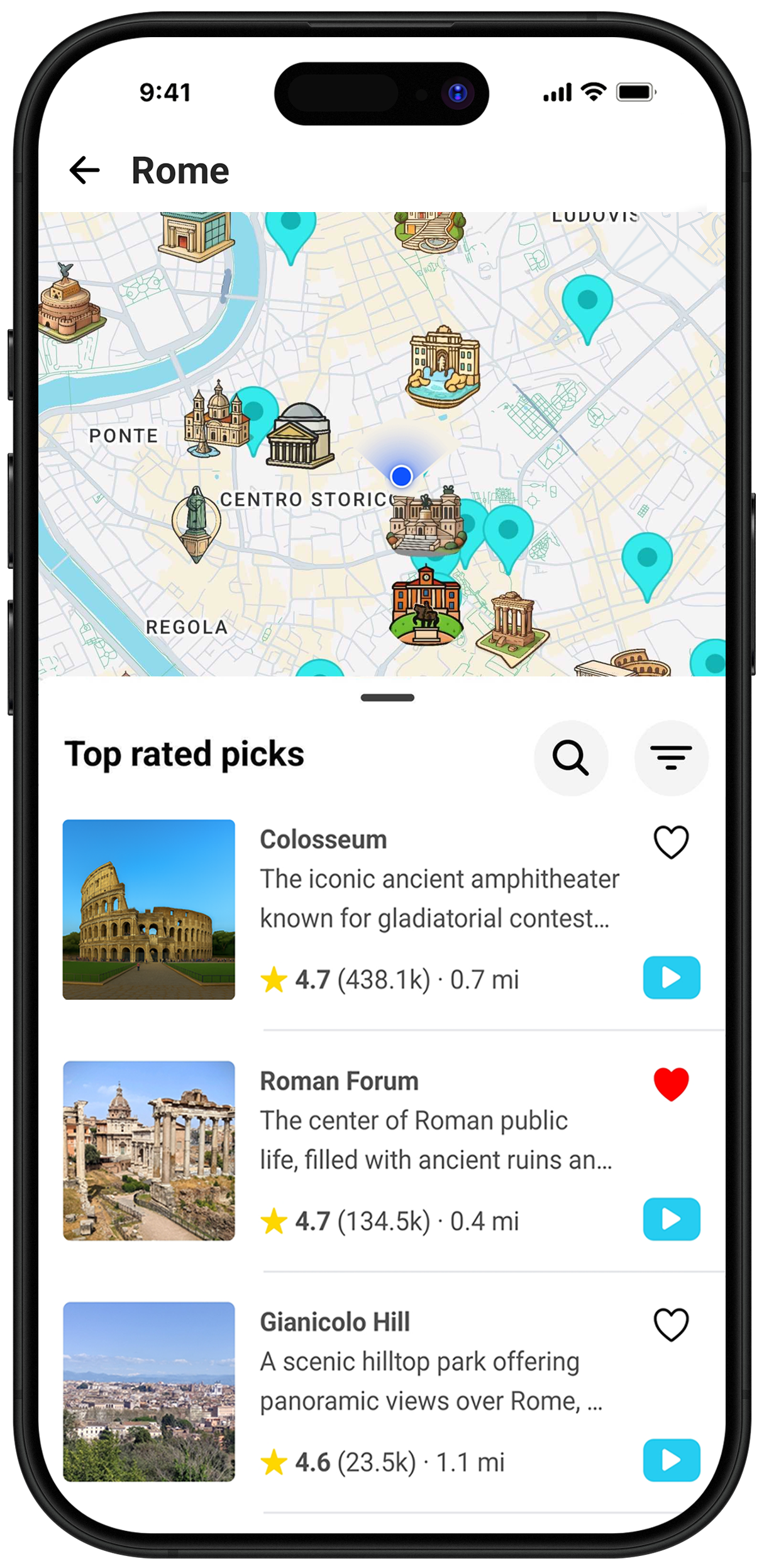
Make the most of your trip with the Travi App
Audio Guides
Professional narrated stories that you can listen to on your own schedule.
Snap & Learn
Point your camera at any monument to instantly identify it and hear its history.
Itineraries
Browse curated day-by-day plans, customize them to fit your style, or build your own from scratch and share with friends.