
5 Days in Florence: Flavors and Markets
For travelers interested in local cuisine and shopping
5 Days in Florence: Flavors and Markets
For travelers interested in local cuisine and shopping
Day 1: Traditional Markets and Florentine Classics
Begin with Florence’s traditional markets and artisan heritage, pairing local street food with historic crafts and ending with classic Tuscan cuisine.
Morning
Start the day with cornetto (Italian croissant, often filled with cream or jam) and cappuccino before heaindg out to visit the Mercato di Sant'Ambrogio, a lively neighborhood market where locals shop for fresh produce, meats, and prepared foods. It's a good spot to try the local favorite of lampredotto (cow stomach sandwich).
Optional add-on: Browse at local artisan shops in the surrounding Sant'Ambrogio neighborhood is known for small, authentic artisan studios.
Head to the Scuola del Cuoio, where traditional leather craftsmanship is demonstrated and high-quality handmade goods reflect Florence’s long-standing design heritage.
Afternoon
Have lunch at the Mercato Centrale, where the ground-floor vendors serve traditional dishes and ingredients in a bustling, authentic market setting. Browse the outdoor area, known as the San Lorenzo Market, made popular for its leather stalls and wide selection of bags, jackets, and other accessories.
Then visit the Officina Profumo-Farmaceutica di Santa Maria Novella, a historic shop offering perfumes, soaps, and herbal remedies rooted in centuries-old traditions.
Late Afternoon/Evening
Walk across Ponte Vecchio, browsing the nearby jewelry stores and small artisan workshops that reflect Florence’s goldsmithing heritage.
Enjoy dinner of local specialties, such as bistecca alla Fiorentina (grilled T-bone steak served rare), ribollita (stew of kale, beans, and bread), or pappardelle al cinghiale (wide noodles with a boar ragu). Finish with tiramisu or cantucci and vin santo (almond biscotti dipped in sweet dessert wine for dessert), a traditional Tuscan way to end the meal.
Day 2: Oltrarno Artisans and Local Flavors
Explore the Oltrarno district, where Florence’s artisan traditions thrive alongside casual eateries and neighborhood markets.
Morning
Start with a budini di riso (custard and rice tart) or bombolini (fried filled donut) from a café around Piazza Santo Spirito, a local square known for its authentic atmosphere.
Browse nearby boutiques and artisan shops in the Santo Spirito area, where handmade goods and unique designs reflect Florence’s creative culture.
Enjoy a snack of schiacciata (Tuscan flatbread sandwiches), a flavorful local specialty perfect for a quick light meal.
Afternoon
Have lunch of local favorites such as pappa al pomodoro (bread and tomato soup), peposo (peppered beef stew), or fiocchetti di pera (pear-stuffed pasta), showcasing traditional Tuscan flavors.
Explore artisan workshops in the Oltrarno, including marbled paper and stationery shops, bookbinding studios, leather stores, and cornici (traditional gilded frames), all emphasizing craftsmanship and heritage.
Optional add-on: Visit Antico Setificio Fiorentino or the Old Silk Factory Fiorentino, a historic silk workshop preserving Renaissance-era textile production techniques (visit must be prearranged).
Evening
Stop at a wine window, such as the one at Buchetta del Vino di Babae, a historic way to enjoy a quick glass of wine served through a small street-facing opening.
Enjoy dinner in Oltrarno followed by a visit to an enoteca (wine bar), where Tuscan wines such as Chianti can be sampled.
End the evening with a gelato crawl around Santo Spirito, comparing flavors from different shops in a lively neighborhood atmosphere.
Day 3: Bologna's Culinary Traditions
Discover Bologna’s rich culinary tradition through its markets, trattorias, and specialty food shops.
Morning
Start with espresso and a small sandwich with mortadella, an iconic pairing in Bologna. Then visit the Mercato di Mezzo, where vendors offer fresh tagliatelle and tortellini, Parmigiano Reggiano, prosciutto di Parma, and aged balsamic vinegar, highlighting the region’s renowned ingredients.
Afternoon
Enjoy a trattoria lunch featuring tagliatelle al ragù (the real “Bolognese”), tortellini in brodo (tortellini in broth with Parmigiano Reggiano), or lasagne verdi (lasagna with green noodles), each representing traditional Bolognese cuisine.
Browse artisan shops near Piazza Maggiore, where food products, ceramics, and specialty goods reflect the city’s culinary identity.
Late Afternoon/Evening
Explore the Quadrilatero, a historic market area filled with shops selling cheese, cured meats, pasta, and baked goods. Shop for items to take home, such as vacuum-packed cured meats, hard cheeses, dry pasta, specialty sauces or spreads, and truffle products (if in season).
Optional add-on: Head to Paolo Atti & Figli Panifico, a historic spot known for its fresh pasta and baked goods. In particular, its fresh tortellini and torta di riso (rice pie) are highly regarded.
Then return to Florence.
Day 4: Tuscan Culinary Traditions
Take a deep dive into hands-on culinary experiences and the agricultural roots of Tuscan cuisine.
Morning
Start with espresso standing at the bar of a café, a common Italian morning ritual. Join a cooking class that includes a visit to the Mercato Centrale, where selecting fresh ingredients provides insight into seasonal cooking and local food culture.
Afternoon
Travel to Fiesole for an olive grove tour and olive oil tasting, such as that offered at Fattoria di Maiano, sampling oils produced from the centuries-old groves that still define the hills and agricultural identity of the Fiesole countryside.
Evening
Return to Florence and enjoy aperitivo at Rinascente Firenze, where rooftop views can be paired with drinks and light bites. End with dinner at a neighborhood trattoria with well-executed dishes highlighting seasonal ingredients and local traditions.
Day 5: Greve and the Heart of Chianti
Experience Tuscany’s rural food culture through wine, olive oil, and traditional butchery.
Day
Head to Greve and explore Piazza Matteotti, where local shops offer olive oil, wine, and regional specialties.
Optional add-on: Stop at Antica Macelleria Falorni, known for high-quality cured meats and traditional Tuscan products.
Afternoon and Evening
Visit the Museo del Vino to learn about wine-making history, featuring antique tools and artifacts. Then head to local wineries and enotecas (wine bars), where tastings provide insight into Chianti wines and the region’s winemaking traditions. Options are available in Greve, as well as in the surrounding region.
Enjoy dinner at a vineyard, where meals are often paired with estate-produced wines and set within scenic countryside surroundings, before returning to Florence.
Alternate Afternoon and Evening Plan for Further Tuscany Exploration
Visit smaller towns nearby, such as Panzano and Radda, that offer local shops, scenic streets, and a slower pace of exploration. If you choose to visit Panzano, Dario Cecchini in Panzano is one of Italy’s most famous butchers and has a restaurant called Solociccia that celebrates traditional Tuscan meat dishes.
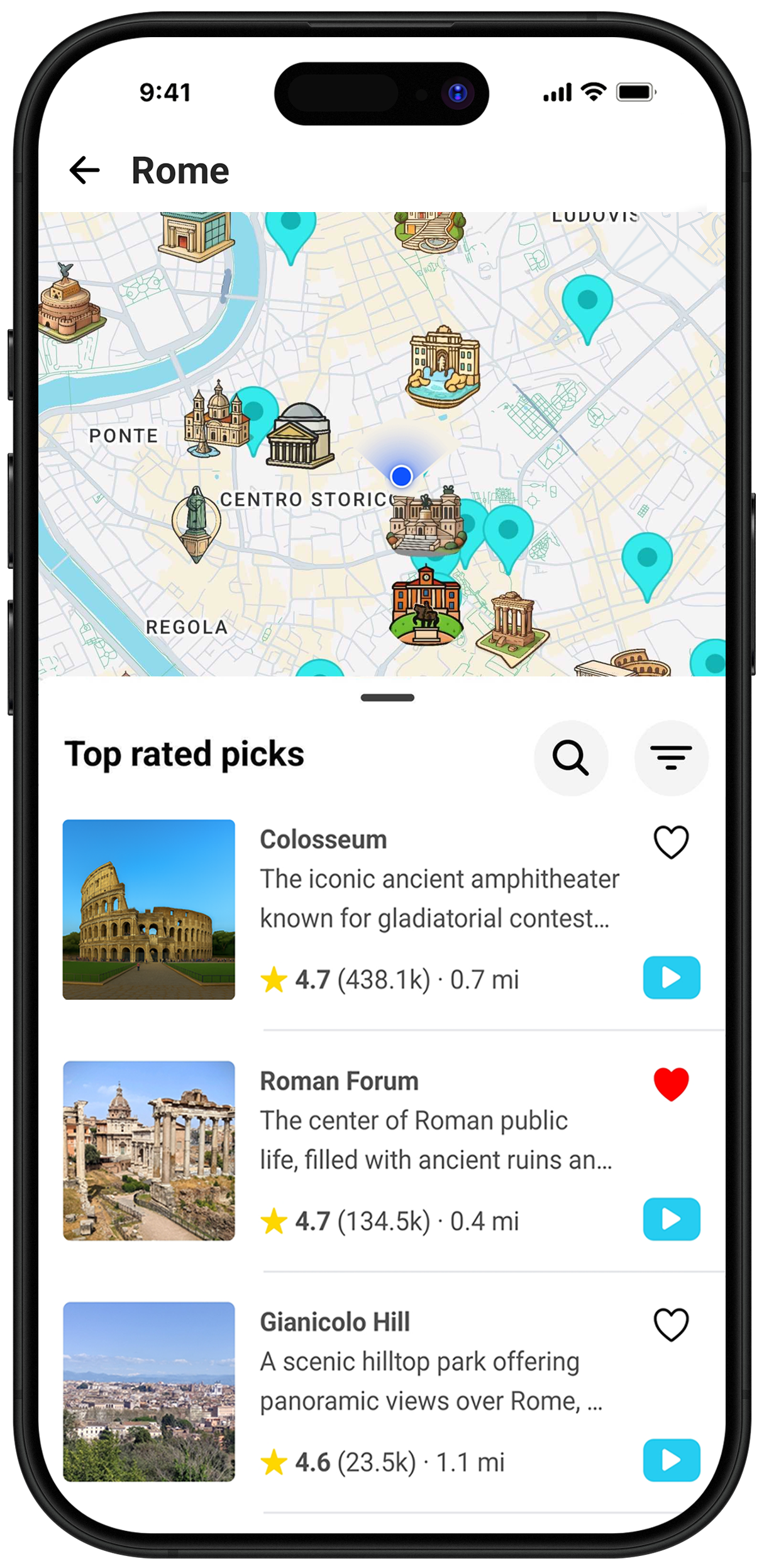
Make the most of your trip with the Travi App
Audio Guides
Professional narrated stories that you can listen to on your own schedule.
Snap & Learn
Point your camera at any monument to instantly identify it and hear its history.
Itineraries
Browse curated day-by-day plans, customize them to fit your style, or build your own from scratch and share with friends.