
4 Days in Dublin
For travelers seeking the most popular sights as well as lesser-known gems of the city
4 Days in Dublin
For travelers seeking the most popular sights as well as lesser-known gems of the city
Day 1: Historic Dublin and First Literary Impressions
Discover Dublin through its Georgian streets, literary institutions, early Irish history, riverside scenery, and traditional music culture while experiencing many of the city’s most iconic landmarks.
Morning
Begin the morning with a traditional Irish breakfast featuring items such as rashers, sausages, eggs, black pudding, grilled tomato, and soda bread at a local café or pub.
Explore Trinity College Dublin, Ireland’s oldest university and one of the city’s most important intellectual and literary landmarks. Take in The Book of Kells Experience, known for its intricate medieval calligraphy and illustrations.
Head toward Grafton Street, one of Dublin’s principal pedestrian streets known for buskers, shops, cafés, and a lively city atmosphere. Pause at Bewley's Grafton Street for tea or coffee alongside traditional Irish scones beneath its stained-glass interiors and historic café setting.
Afternoon
Proceed to the National Museum of Ireland – Archaeology, whose collections explore prehistoric Ireland, Celtic craftsmanship, Viking artifacts, and early medieval treasures. Highlights include Iron Age bog bodies, gold ornaments, and illuminated religious objects that help contextualize Ireland’s mythology and ancient culture.
Walk through Merrion Square Park, one of Dublin’s grand Georgian squares known for colorful doors, elegant terraces, and its statue of Oscar Wilde. Continue to St. Stephen's Green, a landscaped Victorian park surrounded by Georgian architecture and connected to many of Dublin’s literary and political figures.
Continue afterward to St Patrick's Cathedral, historically associated with Jonathan Swift, author of Gulliver's Travels. The cathedral combines Gothic architecture, literary history, and centuries of religious tradition. Requirements for respectful/modest attire apply at churches, synagogues, and other religious sites. Visitors should avoid disrupting religious observances and remain mindful of posted customs.
Optional add-on: Visit the EPIC The Irish Emigration Museum for interactive exhibits exploring Irish migration, diaspora communities, global Irish influence, and personal stories of emigration through multimedia displays and immersive galleries.
Evening
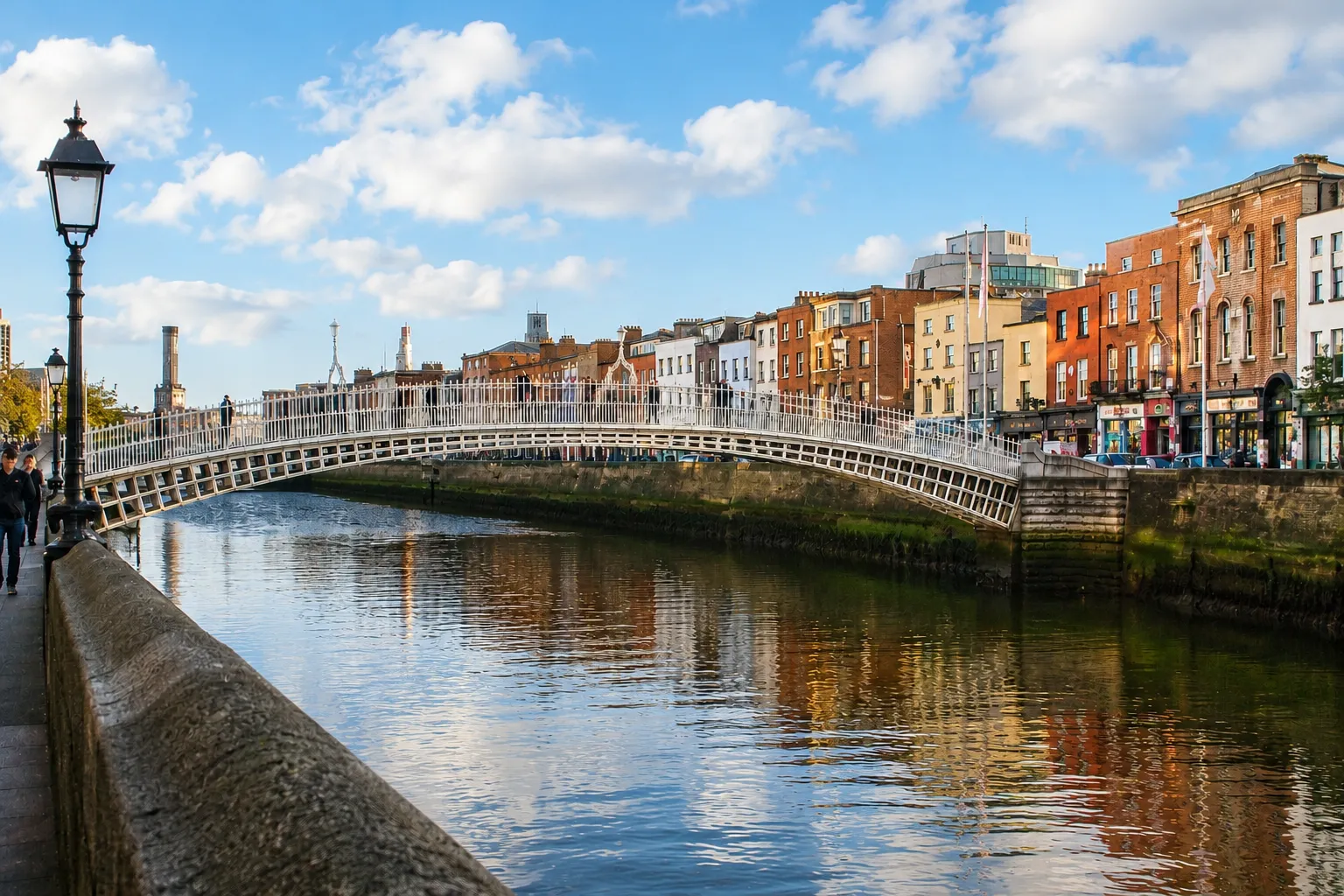
Take a walk along the River Liffey toward the illuminated Ha'penny Bridge, one of the city’s best-known pedestrian bridges and a classic symbol of central Dublin.
Later in the evening, attend a traditional Irish music and dancing performance such as Celtic Nights Dinner & Show or The Irish House Party to experience Irish folk music, storytelling traditions, and dance performances.
Optional add-on: Explore the lively streets and pubs of Temple Bar, considered by many to be Dublin’s best-known nightlife district.
Day 2: Revolution, Guinness, and the Liberties
Explore the political history, brewing heritage, and working-class traditions of Dublin through revolutionary landmarks, historic pub culture, and the atmospheric streets of the Liberties district.
Morning/Early Afternoon
Begin the day at the museum of the General Post Office on O’Connell Street, one of the central sites of the 1916 Easter Rising and an enduring symbol of Irish independence and national identity.
Then take transit or a taxi to Kilmainham Gaol, one of Ireland’s most important historical sites and a powerful symbol of Irish nationalism and independence. Former political prisoners connected to uprisings and revolutionary movements were held here, including leaders of the 1916 Easter Rising. Guided tours explore prison life, rebellion, execution, and Ireland’s struggle for independence. Reservations are strongly recommended when booking windows open, as tours often sell out quickly.
Optional add-on: Continue into Phoenix Park, one of Europe’s largest enclosed urban parks known for broad avenues, deer herds, gardens, and monuments.
Late Afternoon
Continue to the Guinness Storehouse in the historic Liberties district. Exhibits explore the brewing process, advertising history, industrial heritage, and global influence of Guinness. The upper Gravity Bar provides panoramic views across Dublin’s rooftops and surrounding hills.
Evening
Spend the evening exploring The Liberties area, one of Dublin’s oldest working-class districts historically associated with brewing, markets, craftspeople, and traditional pub culture. Enjoy dinner and live music at a historic pub in the area.
Optional add-on: Join a Dublin ghost tour exploring topics and areas such as medieval lanes, cathedral districts, plague history, executions, folklore, and haunted legends.
Day 3: Medieval Dublin and Literary Traditions
Experience Dublin’s medieval foundations, scholarly heritage, and world-famous literary culture through historic libraries, castle architecture, museums, and classic literary pubs associated with generations of Irish writers and intellectuals.
Morning
Begin at Christ Church Cathedral, known for its Gothic architecture, crypts, and Viking-era origins. Requirements for respectful/modest attire apply at churches and other religious sites. Visitors should avoid disrupting religious observances and remain mindful of posted customs.
Then visit Dublin Castle, which served for centuries as the administrative center of British rule in Ireland. Explore the ceremonial rooms, courtyards, and surviving medieval elements while learning about the castle’s political significance and role in Irish history.
Afternoon
Take a break in the Dubh Linn Garden, which is known for a grassy lawn with Celtic knot designs of sea serpents and for being the "black pool" (Dubh Linn) where Vikings docked their ships.
Visit the Chester Beatty Library, whose collections include illuminated manuscripts, rare books, Islamic art, East Asian scrolls, and sacred texts from across the world.
Optional add-on: Explore the Museum of Literature Ireland, dedicated to Ireland’s literary heritage and writers including James Joyce, Samuel Beckett, and W. B. Yeats. Exhibits explore Irish storytelling traditions, manuscripts, recordings, and modern literary culture.
Evening
Enjoy dinner at a traditional Victorian pub, such as The Long Hall, where you’ll find a warm atmosphere, dark polished wood interiors, and ornate craftsmanship. Consider trying Irish stew (usually lamb, carrots, potatoes, onions), soda bread, boxty (Irish potato pancakes), or other traditional comfort dishes alongside Guinness or Irish whiskey.
Spend the rest of the evening exploring Dublin’s literary pub culture by visiting pubs that are associated with journalists, writers, intellectuals, and famous works. Visit locations such as Davy Byrnes, The Palace Bar, and Mulligan’s or join an organized tour, such as the Dublin Literary Pub Crawl, where actors and guides perform excerpts from Irish literature while leading visitors through historic pubs and literary districts.
Day 4: Coastal Dublin and Castle Landscapes
Escape the city center to experience Dublin’s dramatic coastal scenery, fishing villages, cliff walks, maritime atmosphere, and historic castle estates.
Day
Travel north from central
| Header | Header |
|---|---|
| Cell | Cell |
| Cell | Cell |
| Cell | Cell |
Dublin to Howth, a historic fishing village known for dramatic coastal scenery, maritime culture, and cliffside walking trails.
Complete part of the Howth Cliff Walk, where a variety of paths overlook rocky headlands, sea cliffs, lighthouse views, and Dublin Bay.
Continue afterward to Malahide Castle & Gardens, a medieval castle associated with the Talbot family for centuries. Explore the furnished interiors, gardens, and wooded grounds while learning about aristocratic history and legends connected to the estate.
Evening
Return to Howth for a seafood-focused dinner overlooking the harbor. Consider trying seafood chowder, fish and chips, or Dublin Bay prawns while watching fishing boats and evening light across the marina.
Optional add-on: Conclude the trip with a theatre performance at either The Abbey Theatre, Ireland’s national theatre associated with the Irish Literary Revival, or The Gaiety Theatre, one of Dublin’s historic performance venues that often hosts touring companies.
Options for Bad Weather
In case of bad weather, visit the:
- EPIC The Irish Emigration Museum for interactive exhibits exploring Irish migration, diaspora communities, global Irish influence, and personal stories of emigration through multimedia displays and immersive galleries
- National Gallery of Ireland for collections of Irish and European paintings, sculpture, portraiture, and decorative arts featuring artists such as Caravaggio, Vermeer, Jack B. Yeats, and Monet
- The Little Museum of Dublin for guided exhibits examining twentieth-century Dublin life, social change, music, politics, literature, and everyday city culture through photographs, artifacts, and storytelling
- Irish Museum of Modern Art for contemporary art by Irish and international artists displayed in the Royal Hospital Kilmainham
- Irish Whiskey Museum for guided exhibits tracing the history of Irish whiskey production, trade, decline, and revival through interactive storytelling, historic displays, and optional tasting experiences
Make the most of your trip with the Travi App
Audio Guides
Professional narrated stories that you can listen to on your own schedule.
Snap & Learn
Point your camera at any monument to instantly identify it and hear its history.
Itineraries
Browse curated day-by-day plans, customize them to fit your style, or build your own from scratch and share with friends.