
5 Days in Boston: History and Memory
For travelers seeking an in-depth exploration of the history of the city and the nation
5 Days in Boston: History and Memory
For travelers seeking an in-depth exploration of the history of the city and the nation
Day 1: Revolutionary Memory and Harbor Heritage
Trace Boston's Revolutionary story through the places where rebellion was debated, fought, commemorated, and transformed into the city's defining historical narrative. This day follows the Freedom Trail, Boston's historic spine, revisiting its most important sites through the lens of the city's Revolutionary past and the ways that past has been preserved and commemorated.
Morning
Begin in Boston Common, America's oldest public park, and pause at The Embrace, a contemporary memorial to Martin Luther King Jr. and Coretta Scott King that places a modern story of memory within Boston's oldest civic landscape.
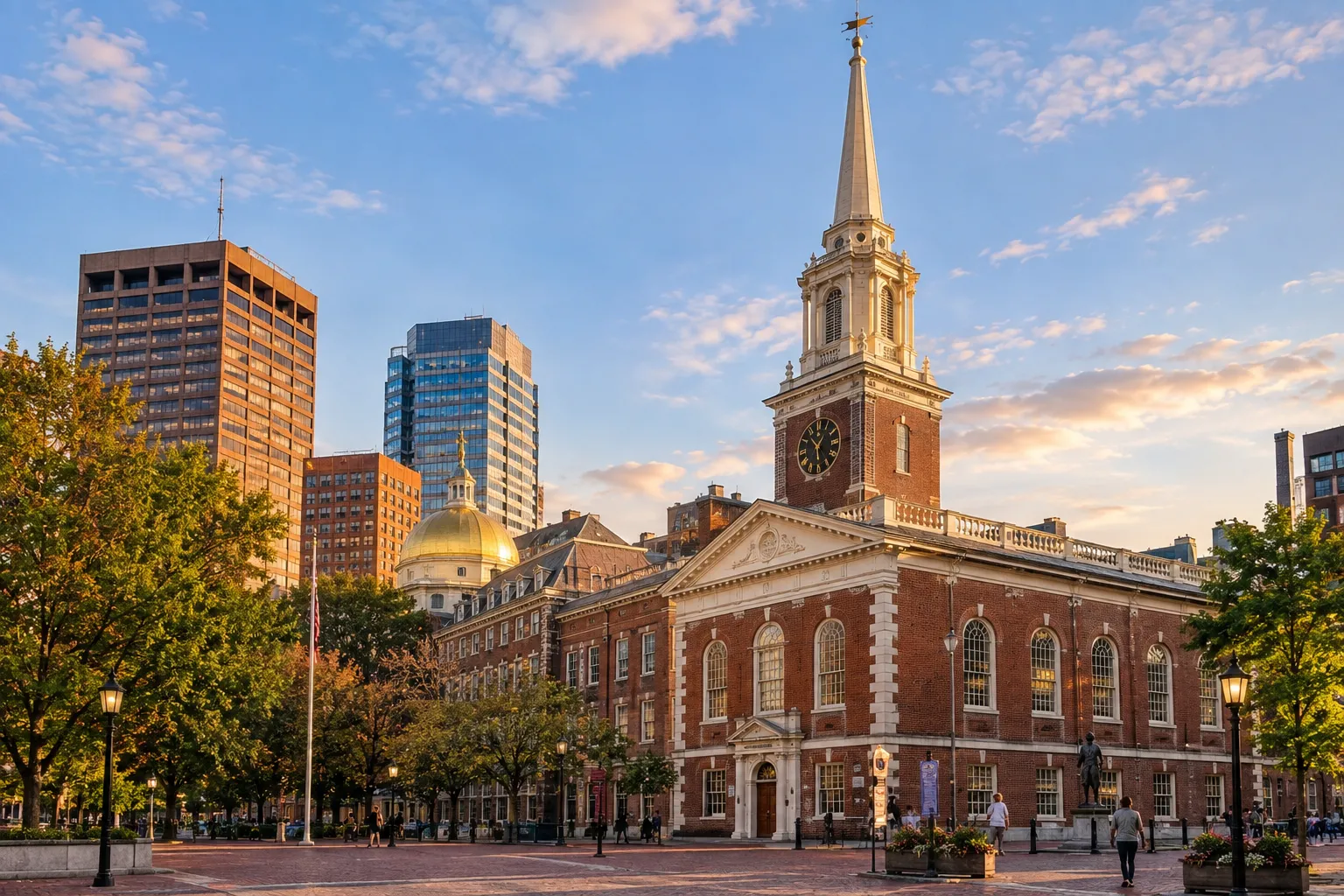
Continue past the Massachusetts State House, whose golden dome overlooks Beacon Hill, then stop at Granary Burying Ground, where many of the Revolution's most famous figures are remembered.
Visit King's Chapel, a reminder of Boston's colonial religious establishment, followed by Old South Meeting House, where colonists gathered before the Boston Tea Party.
Optional add-on: Visit the Boston Irish Famine Memorial, a small but poignant reminder of the city's long history of immigration and the Irish community that transformed Boston.
Continue to the Old State House, where Massachusetts's colonial government once met and where the Declaration of Independence was proclaimed to Bostonians in 1776, then pause at the Boston Massacre Site, where an event that became powerful Revolutionary propaganda is remembered in the modern city.
Optional add-on: Visit the New England Holocaust Memorial, a striking modern memorial dedicated to the remembrance of genocide and the responsibilities of historical memory.
Late Morning/Afternoon
Continue to Faneuil Hall, the “Cradle of Liberty,” where political debate and public oratory helped shape Revolutionary Boston and later civic life.
Then visit the Boston Tea Party Ships & Museum, which reconstructs one of the Revolution's most famous acts of protest.
Evening
Walk along Long Wharf and the waterfront, where Boston's commercial and maritime power helped shape the city's colonial prosperity and its connection to the wider Atlantic world.
Day 2: Revolutionary War and Living History
Follow the Revolution from the battlefields of Charlestown to the North End, where military history, legendary figures, and a historic neighborhood intersect.
Morning
Cross the harbor to the Charlestown Navy Yard, where Boston's maritime history continues into the early United States.
Visit the USS Constitution and Museum, exploring the history of “Old Ironsides,” the early U.S. Navy, and the War of 1812. The ship provides a useful transition from the Revolution to the emergence of the new American republic.
Continue to Bunker Hill, site of the Revolution's first major battle around Boston. Visit Bunker Hill Monument and take in the surrounding landscape, where the physical setting helps bring the events of 1775 into focus, and the Bunker Hill Museum for an overview of the historic battle.
Optional add-on: Climb Bunker HIll Momument for panoramic views of the Boston skyline and harbor area.
Afternoon
Cross into the North End and visit Copp's Hill Burying Ground, one of Boston's oldest cemeteries and a suitable place to consider the people and communities behind the city's Revolutionary story.
Continue to the *Old North Church, where the famous lantern signal helped launch one of the Revolution's most enduring stories, then visit the Paul Revere House, the oldest surviving building in downtown Boston and the home of one of the Revolution's most mythologized figures.
Evening
Spend the evening in the North End, Boston's historic Italian-American neighborhood, exploring its narrow streets and historic churches.
Day 3: Black History and Civic Memory
Explore Boston's Black history and its public memory, from abolition and the Civil War to the intellectual and civic institutions of Back Bay.
Morning
Begin in Beacon Hill with highlights of the Black Heritage Trail, exploring the homes, institutions, and public spaces associated with Boston's historic Black community and its central role in the abolitionist movement and the struggle for equal rights.
Pause at the Robert Gould Shaw and 54th Regiment Memorial, a powerful monument commemorating the Massachusetts African American regiment that fought in the Civil War.
Explore the Abiel Smith School and African Meeting House, the heart of Boston's 19th-century Black community during your visit to the Museum of African American History to place these sites within the broader history of the community.
Optional add-on: Visit the Boston Athenaeum, one of America's oldest independent libraries.
Afternoon
Optional add-on: Stop at the Boston Women's Memorial on Commonwealth Avenue, honoring three influential Boston women and providing a brief introduction to the changing representation of women's history in the city's public spaces.
Continue to Copley Square, one of Boston's great civic and cultural landscapes. Visit Trinity Church and the Boston Public Library - Central Library, whose architecture and collections reflect the cultural ambitions of the late-19th-century city.
Evening
Explore Back Bay, where grand residences, churches, cultural institutions, and commercial buildings reveal Boston's transformation from a colonial port into a wealthy Gilded Age metropolis.
Day 4: Revolutionary Cambridge and Literary Memory
Cross the Charles to Cambridge, where Revolutionary headquarters, Harvard's intellectual legacy, and Longfellow's literary world reveal another layer of Boston's history and memory.
Morning/Early Afternoon
Travel to Cambridge and begin at Cambridge Common, where Washington took command of the Continental Army in 1775.
Visit Longfellow House–Washington's Headquarters National Historic Site, where George Washington established his headquarters during the Siege of Boston and where poet Henry Wadsworth Longfellow later lived.
Continue along Brattle Street, sometimes called Tory Row, to see the historic houses and landscapes associated with Cambridge's wealthy colonial residents and Loyalists.
Optional add-on: Explore Mount Auburn Cemetery, where you'll find landscaped grounds, monumental art, and the graves of generations of prominent Bostonians.
Afternoon
Continue to Harvard Yard, exploring the university's colonial origins and its role in the intellectual and political life of New England. Follow a self-guided campus tour through the historic heart of Harvard Univeristy, including Memorial Hall, a Civil War memorial building.
Evening
Stay in Cambridge for dinner and an evening around Harvard Square, whose bookstores, institutions, and historic streets reflect the city's enduring intellectual identity.
Day 5: Salem, Memory and Myth
Journey to Salem to explore a colonial tragedy, a maritime past, and a literary legacy.
Day
Optional add-on: Visit the Salem Witch Museum for dramatic stage-set presentations about the witcvh trials.
Begin in Salem at The Witch House at Salem, the surviving home of Judge Jonathan Corwin and one of the few buildings in Salem directly connected to the 1692 witch trials. Continue to the Peabody Essex Museum, exploring Salem's history as a global maritime and trading center and placing the city's famous witch trials within a much broader history.
Then visit the Salem Witch Trials Memorial, which provides an opportunity to reflect not only on the people persecuted in 1692, but also on how subsequent generations have interpreted and commemorated the tragedy.
Head to the Salem Maritime National Historical Park to explore the city's role in international trade and the wider Atlantic world, a history often overshadowed by the witch trials.
Optional add-on: Visit The House of the Seven Gables, a historic house associated with Nathaniel Hawthorne and Salem's literary identity.
Evening
Before returning to Boston, have dinner at a historic setting such as Turner's Seafood at Lyceum Hall, housed in a building with deep roots in Salem's civic and cultural history.
Bad Weather Options
In case of bad weather, visit John F. Kennedy Presidential Library and Museum, which extends the itinerary into 20th-century political history and explores the creation of presidential and national memory through photographs, documents, artifacts, and multimedia exhibits.
Optional Trip Extensions: Plymouth
To extend your time in Boston, consider a day trip or overnight trip to Plymouth explore the history and mythology surrounding the Pilgrims, Plymouth Colony, and the enduring American memory of the Mayflower story. Visit Plimoth Patuxet Museums for their recreated seventeenth-century settlements that bring early New England to life, including a Historic Patuxet Homesite, a 17th century English Village, and the Mayflower II, a replica of the original ship. Head to Pilgrim Hall Museum for original 17th-century artifacts and deeper historical context.
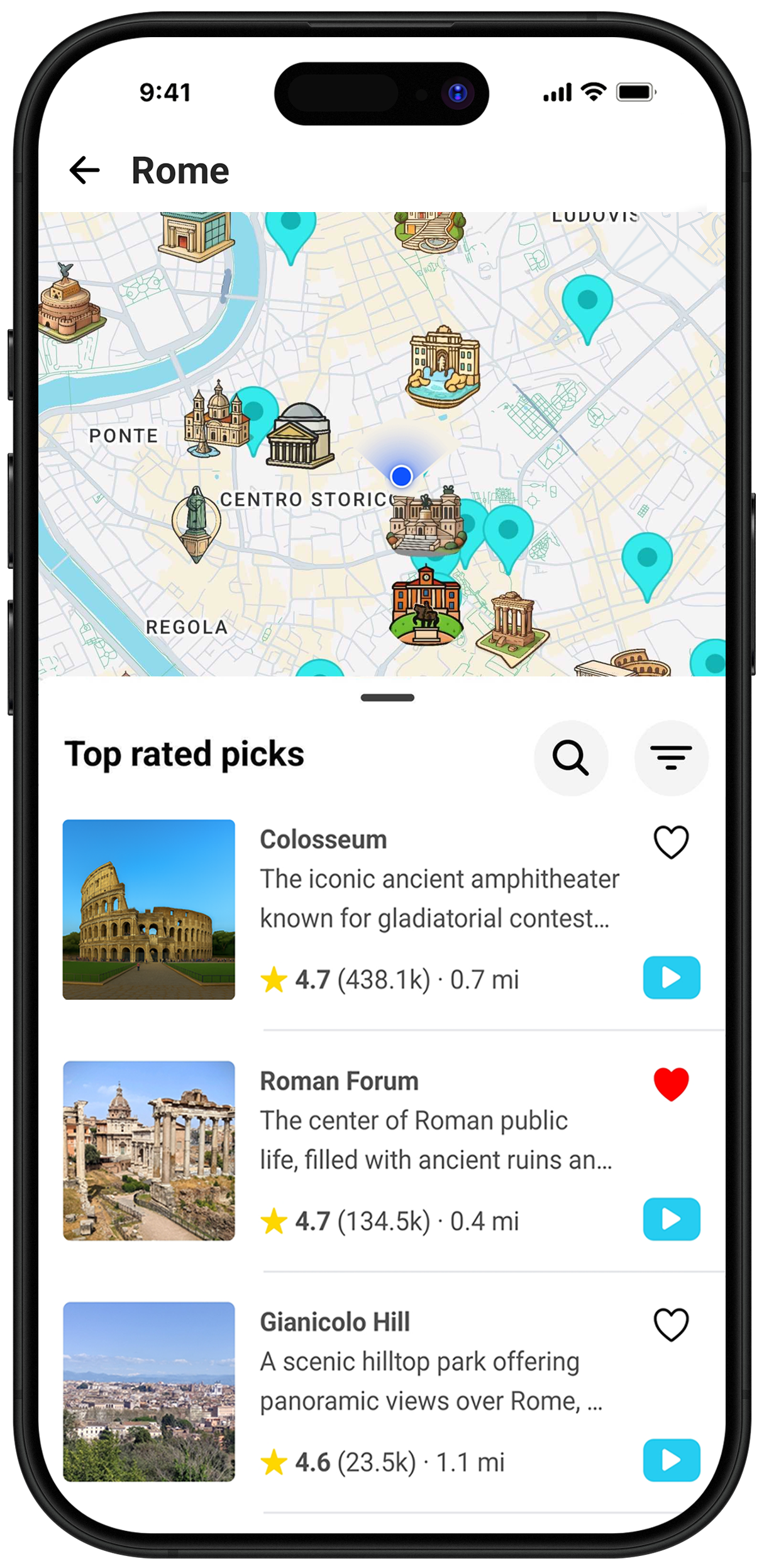
Make the most of your trip with the Travi App
Audio Guides
Professional narrated stories that you can listen to on your own schedule.
Snap & Learn
Point your camera at any monument to instantly identify it and hear its history.
Itineraries
Browse curated day-by-day plans, customize them to fit your style, or build your own from scratch and share with friends.